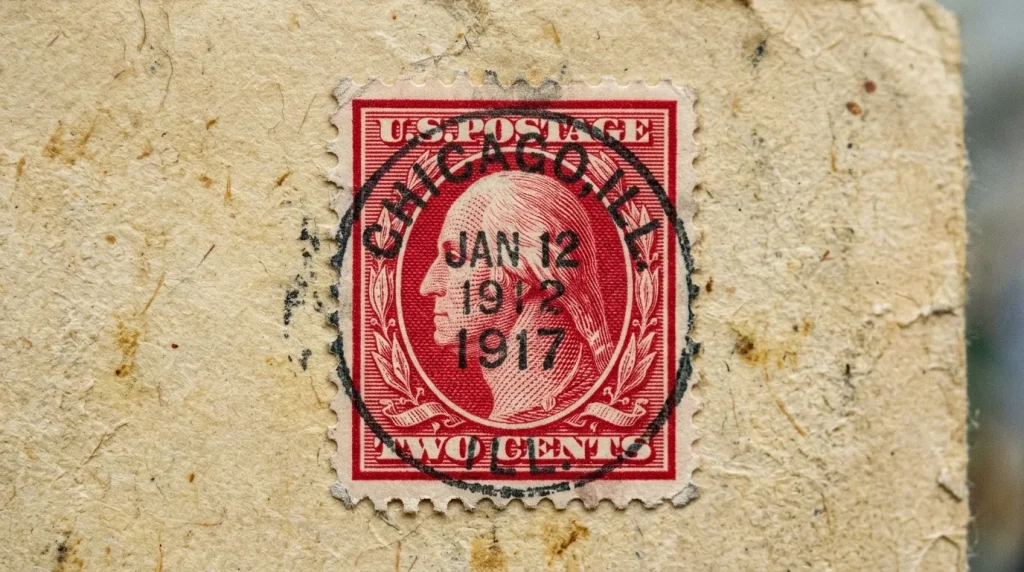

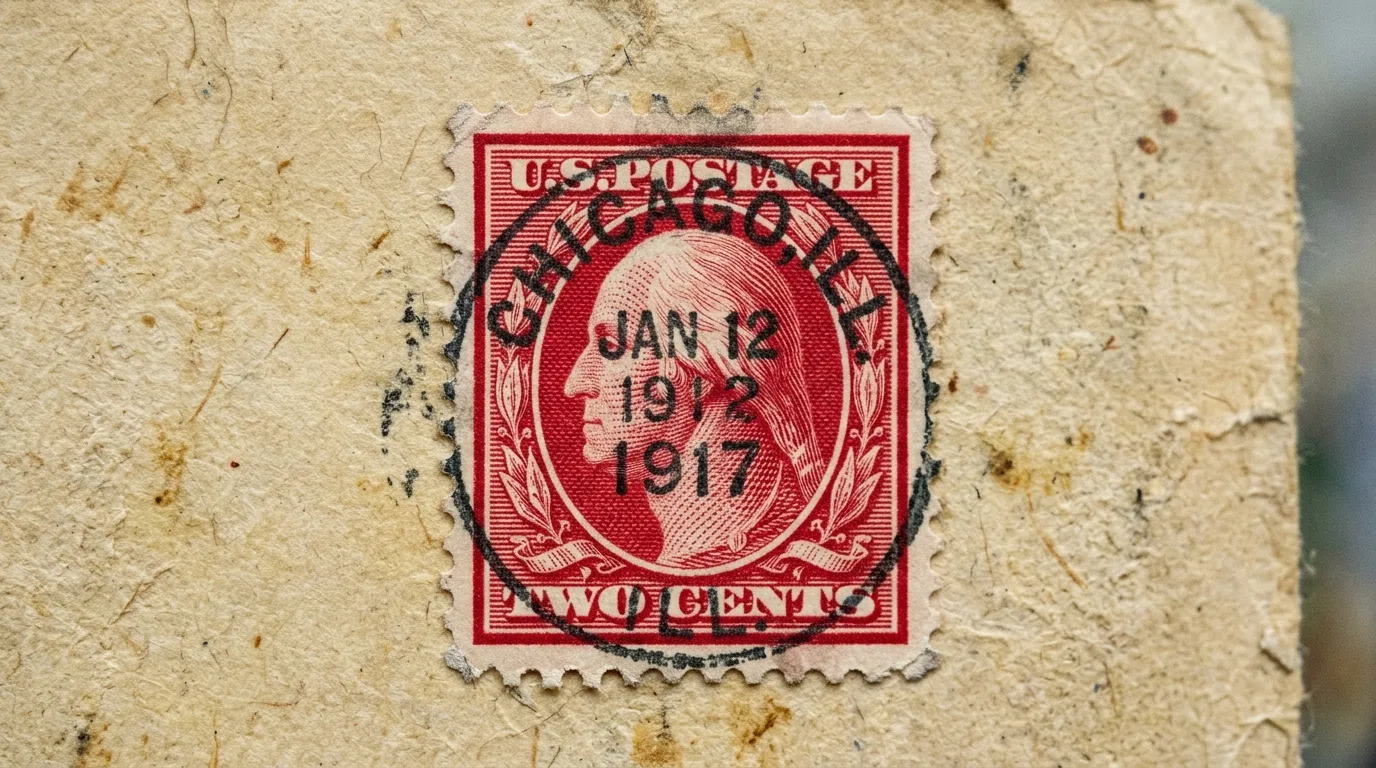
The vast majority of red two-cent stamps featuring the first president are worth less than a dollar.
They were printed by the billions for everyday mail use.
However, a small fraction of them possess unique characteristics—like specific perforations, rare watermarks, or distinct design types—that make them highly valuable to serious collectors.
To know for sure, you must identify the exact variety using specialized tools and reference materials.
The Washington-Franklin Series: A Philatelic Masterpiece
Between 1908 and 1922, the US Postal Service issued what is now known as the legendary Washington-Franklin Series.
This era of stamp production is both famous and infamous among collectors.
The designs were intentionally uniform to save on production costs.
Because the basic design remained unchanged for years, the variations are found in the physical properties of the paper and the printing process.
Identifying these differences is the ultimate test of a collector’s skill.
This long-running series created a complex web of similar-looking stamps that continues to fascinate hobbyists today.
Factors Determining the Value of 2 Cent Washington Stamp Variations
Not all red stamps are created equal.
The value of any specific stamp depends entirely on a combination of highly specific physical traits.
You cannot rely on the portrait alone to determine its worth.
Perforations and the Elusive Perf 11
Perforations are the small holes punched between stamps to make them easy to separate.
Measuring these holes is a fundamental skill in stamp collecting.
You will need a specialized tool called a perforation gauge to count the number of holes within a two-centimeter span.
Some stamps are perforated 12 on all sides, while others might be perforated 10 or 11.
Finding a stamp with a rare perforation measurement, such as a specific perf 11 variation, can instantly elevate its value from common to exceptional.
For a deeper understanding of how these physical traits affect price, you can review our comprehensive stamp value guide.

The Importance of Watermarks
Watermarks are faint designs pressed into the paper during its manufacture.
They were used by the government as a security measure to prevent counterfeiting.
To see them, you must place the stamp face down in a black tray and apply a few drops of watermark fluid.
The US Postal Service used both double-line and single-line “USPS” watermarks during this period.
Some stamps were printed on unwatermarked paper entirely.
Discovering the correct watermark is an essential step in identifying rare 2 cent stamps correctly.
Distinguishing Type I vs Type II
The printing plates used to create these stamps wore down over time and had to be replaced or repaired.
This resulted in subtle differences in the printed image, known as “types.”
The differences between type I vs type II are often found in the shading lines of the portrait or the toga button.
You will likely need a magnifying glass or a high-resolution scan to spot these microscopic variations.
A type I might have distinct, unbroken lines in the shading.
A type II might show a heavy line of color in a specific area.
Knowing which type you have is absolutely critical for accurate identification.
The Red Line Stamp Error Misconception
Many novice collectors get excited when they spot a red line along the edge of their stamp.
They often assume they have discovered a valuable printing mistake.
This is commonly referred to as the red line stamp error, but it is entirely a misconception.
These lines are actually guide lines used by the printers to align the sheets for cutting and perforating.
They are a normal part of the production process and do not add any premium to the stamp’s value.
True errors, such as inverted centers or missing colors, are exceptionally rare and well-documented.
Identifying Your Stamp Using Expert Resources
You cannot identify these complex variations simply by looking at pictures online.
You need authoritative reference materials.
The Scott Catalogue US stamps section is the universally accepted standard for identification.
This catalog assigns a unique number to every known variation and provides detailed descriptions of their characteristics.
It also lists the current market value for stamps in various conditions.
For broader advice on building your collection, explore our detailed collecting guides.
The Role of Professional Authentication
If you believe you have found a genuinely rare variation, you must have it authenticated.
High-value stamps are frequently forged or altered by unscrupulous individuals adding fake perforations.
You should send your potential treasure to a recognized authority like the Philatelic Foundation.
These organizations employ experts who use advanced technology to verify the stamp’s authenticity.
They will issue a certificate that guarantees the stamp’s identity, which is essential if you ever plan to sell it.
An uncertified “rare” stamp will rarely fetch its true market price.
Checking Real Market Values
When estimating what your stamp might sell for, do not rely on asking prices.
Anyone can list a common stamp for a million dollars online.
Instead, check the “sold listings” exclusively on eBay to see what buyers are actually willing to pay.
This provides a realistic snapshot of the current market.
Keep in mind that condition is paramount; a stamp with perfect centering, intact perforations, and original gum will always sell for a premium over a damaged copy.
Summary: Common vs Rare Features
To help you organize your search, here is a quick reference table comparing common traits with those that indicate a potentially valuable stamp.
| Feature | Common Trait | Potentially Rare Trait |
|---|---|---|
| Perforations | Perf 12 all around | Perf 11, or compound perforations |
| Watermark | Single-line USPS | Double-line USPS, or unwatermarked |
| Design Type | Type I | Type II, III, or higher |
| Format | Sheet stamp | Coil stamp or booklet pane |
| Condition | Used, heavily cancelled | Mint, never hinged (MNH) |
Conclusion
Identifying George Washington stamps from the early 20th century is a challenging but rewarding endeavor.
While the vast majority are common, the thrill of the hunt keeps collectors searching for that one elusive rarity.
Equip yourself with a perforation gauge, watermark fluid, and a good catalog, and begin your investigation.
Frequently Asked Questions
Are all red two-cent Washington stamps valuable?
No, the overwhelming majority were printed in the billions and are worth very little. Only specific variations with rare perforations, watermarks, or design types hold significant value.
How do I check the watermark on my stamp?
You need to use a special, non-destructive watermark fluid and a black tray. When the fluid evaporates, the stamp remains unharmed, but the watermark becomes temporarily visible against the dark background.
What is the Scott Catalogue?
The Scott Catalogue is the standard reference book used by stamp collectors worldwide. It assigns specific numbers to every stamp and its variations, providing detailed identification criteria and estimated market values.
Should I trust online listings for stamp values?
You should only trust completed, “sold” listings on platforms like eBay. Active listings with exorbitant asking prices are often inaccurate or attempting to deceive inexperienced buyers.
Do I need a certificate for a rare stamp?
Yes, if your stamp is potentially worth hundreds or thousands of dollars, a certificate from a recognized expertizing service like the Philatelic Foundation is highly recommended. It guarantees authenticity and maximizes resale value.
Get our latest guides, news, and insights highlighted in your Google Search & AI Overviews.