Did you know that mailing something via Certified Mail adds a critical layer of security and tracking to your crucial documents? But a common question many encounter is whether Certified Mail requires a conventional postage stamp.Understanding the postal rules around Certified Mail is essential if you want to ensure your items are sent correctly, avoid delays, and have proof of delivery. Certified Mail isn’t just about slapping a stamp on an envelope-it involves specific labels and fees that guarantee accountability from the U.S. postal Service.Whether you’re a business owner sending contracts or an individual mailing legal notices, knowing if and when a stamp is needed can save you time, money, and hassle. This guide will clarify the postage requirements for Certified Mail, explain how the process works, and highlight the options available, helping you make informed mailing decisions with confidence. Stay with us to uncover everything you need to know about Certified Mail postage rules and why they matter for your important correspondence.
Understanding Certified Mail and Its Postal Requirements
Certified Mail is a trusted method used by individuals and businesses to ensure important documents or packages reach their intended recipients with verifiable proof. At its core, Certified Mail provides more than just delivery – it offers a formal record of mailing and receipt, a feature frequently enough necessary for legal, financial, or contractual correspondence. While many picture Certified Mail as simply requiring an extra sticker or label, the service encompasses specific postal requirements designed to guarantee security and accountability. Understanding these requirements is essential for anyone looking to use this service effectively.
one key detail is that Certified Mail is not a standalone postal class but an add-on service available with First-Class Mail or other USPS mailing options. This means you must pay for the underlying postage separately, whether through stamps, printed postage, or prepaid labels. The Certified Mail service itself involves applying a unique barcode and a return receipt option if desired, which helps in tracking and confirming the delivery status. Importantly, the certified mail fee covers the monitoring and recording of the package’s journey, not the actual postage for transit.
Postal requirements include:
- Applying adequate postage for the item’s weight and class (e.g., First-Class or Priority Mail).
- Purchasing the Certified Mail service at the time of mailing to receive a unique Certified Mail number for tracking.
- Affixing the Certified Mail label or sticker on the envelope or package as directed by USPS.
- Completing the return receipt form (if requested) for the sender’s records.
- Presenting the item in person at a USPS retail counter or using authorized online services to enable official tracking.
For example, in 1955, the USPS issued a specific 15-cent Certified Mail stamp designed to be used alongside regular postage, underscoring the necessity of using both postage and certification elements when sending certified mail items [[1]](https://www.mysticstamp.com/fa1-1955-15c-certified-mail/).
as Certified Mail services are built upon standard postage requirements, skipping the base postage or misapplying fees can result in returned or delayed mail. To avoid complications, always check the combined cost – postage plus the Certified Mail fee – and verify labels and receipts are filled out correctly. This ensures that sensitive letters or parcels benefit fully from the accountability and tracking that Certified Mail provides.
Do You Need a Stamp for Certified Mail? Clarifying Postal Rules
Certified Mail can sometimes confuse senders who wonder if an actual postage stamp is required alongside its tracking and receipt features. The straightforward answer is yes-you always need to pay for the postage when sending Certified Mail. However, the way you provide this postage has evolved over time. While traditional adhesive postage stamps are still accepted, you are not limited to them exclusively.Certified Mail is an add-on service attached to a mail class like first-Class Mail or Priority Mail, so paying for the actual delivery requires postage payment that covers the parcel’s weight and destination.
In practical terms, this means you can use:
- Physical stamps: Classic postage stamps remain valid for covering the mail’s base cost.
- Metered postage: Businesses often use postage meters or online postage printing services, which print an indicium directly on the envelope or label.
- Prepaid labels and shipping software: If you purchase Certified Mail online through USPS or third-party platforms, your postage is typically incorporated into a printed label rather than a physical stamp.
The USPS even issued a specific 15-cent Certified mail stamp back in 1955, which was meant to be affixed in addition to regular postage, illustrating that the Certified Mail “stamp” itself only covered the certification tracking fee-not the shipment cost. Today,while that particular certified stamp is a collector’s item,the principle remains the same: Certified Mail requires proper postage payment plus the additional certification fee [[1]](https://www.mysticstamp.com/fa1-1955-15c-certified-mail/).
Neglecting to apply sufficient postage, whether by stamp or other valid methods, will result in your mail being delayed, returned, or perhaps undeliverable as Certified Mail. To avoid this, make sure you calculate postage according to the item’s weight and class, then add the Certified Mail service fee when paying at a USPS counter or online. Remember, the Certified Mail service fee does not cover postage itself-it is strictly for the tracking and proof of mailing services.So while you don’t necessarily need a “stamp” if you use digital postage, you do always need paid postage in some form for your Certified Mail to be accepted and processed smoothly.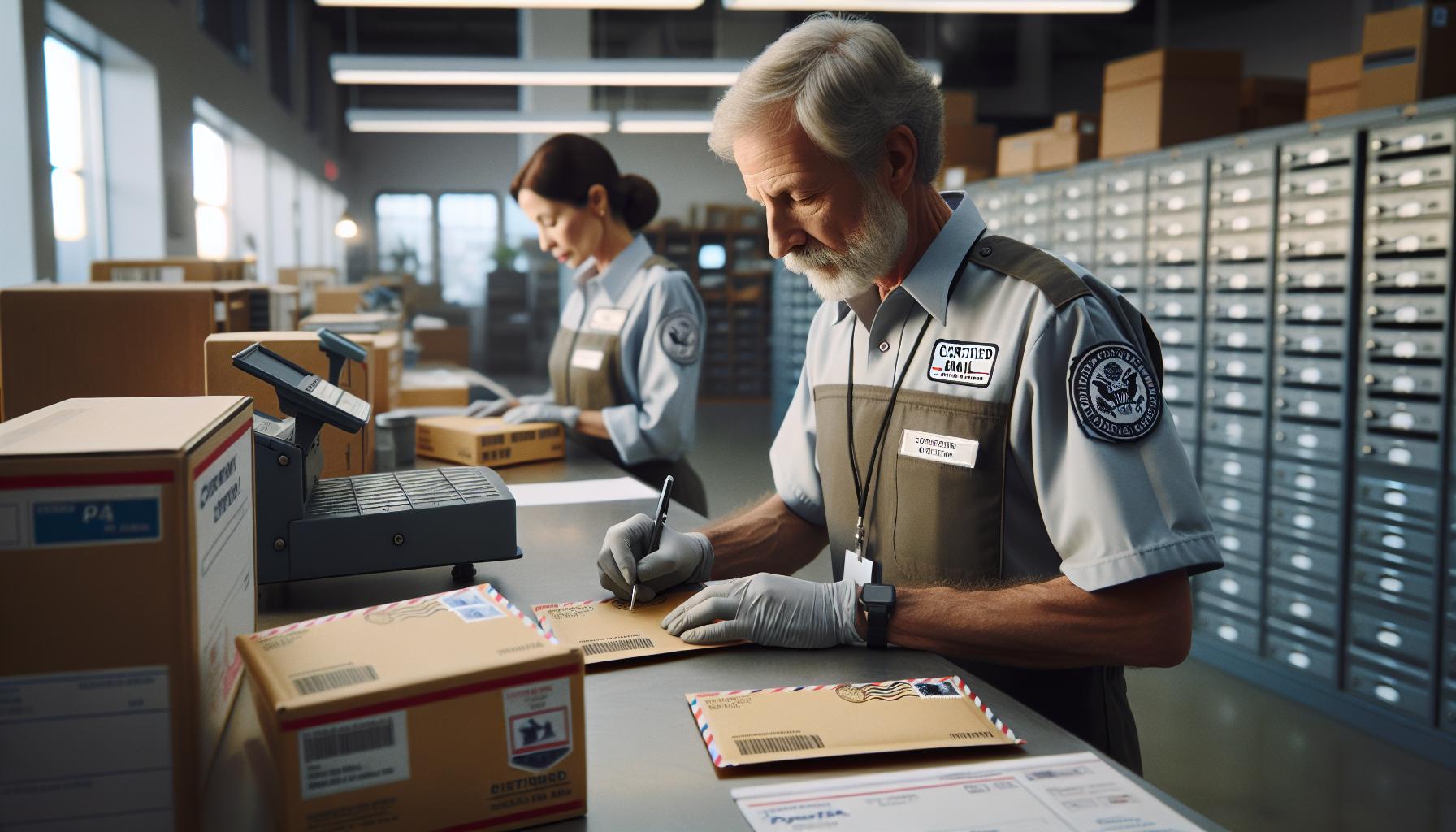
How Postal Services Process Certified Mail Without Stamps
It’s a common misconception that certified mail must always bear traditional postage stamps to be properly processed by the USPS. In reality, postal services have adapted to modern mailing practices, allowing certified mail to be handled efficiently without physical stamps. The key is that the mail piece must have valid postage payment documented in an acceptable form, not necessarily a stamp affixed to the envelope.
When certified mail is sent without a traditional stamp, the USPS relies on choice postage evidence-such as a digitally printed indicium or metered postage marks. These forms of postage payment are generated by postage meters or online postage services authorized by the USPS, and they carry all the necessary data for postal employees to recognize that postage has been paid. This process enables fast scanning and automated sorting, improving operational efficiency while maintaining mail security.
How the USPS Verifies Postage Without a Stamp
- Digital indicia: These are barcoded images printed directly on the mailing label or envelope. They embed data such as postage amount, mailing date, and tracking number, allowing USPS machines to authenticate payment instantly.
- Prepaid shipping labels: Purchased online,they combine postage cost and certified mail fees into one printed label applied to the mail piece. This label also usually includes a printable Return Receipt or tracking barcode facilitating proof of delivery.
- Metered postage: Commonly used by businesses, postage meters print a postage mark that the USPS accepts as payment in lieu of stamps.These marks comply with USPS format standards, ensuring seamless recognition during processing.
In practice, this means your certified mail is scanned upon acceptance to verify postage and service fees have been paid. The USPS sorting machines read the digital marks or labels, routing the mail automatically and associating it with tracking information for monitoring throughout the delivery journey. This process avoids delays that can occur if a physical stamp is missing or insufficient.
To give an example,many businesses that handle large volumes of certified mail rely exclusively on postage meters or online services rather than applying individual stamps. This reduces labor, improves accuracy, and integrates tracking seamlessly. Similarly, a sender using the USPS website or third-party platforms can print certified mail labels including both postage and certification fees-bypassing the need for traditional stamps altogether while fully complying with postal requirements.
Ultimately, the absence of a physical stamp does not obstruct or complicate the certified mail process, as long as the postage payment is properly documented and visible on the mail piece.This flexibility not only accommodates evolving mailing habits but also guarantees that certified mail retains its signature benefits of proof of mailing and delivery tracking, without being tied to old-fashioned stamp use [[1]](https://www.quadientdirect.com/blog/post/how-to-send-certified-mail-a-step-by-step-guide)[[3]](https://www.stamps.com/usps/what-is-certified-mail/).
Alternatives to Stamps for Certified Mail: What’s Allowed?
One of the best-kept secrets about certified mail is that you don’t have to rely on traditional stamps to cover postage. Modern postal systems have evolved to offer numerous alternatives that accommodate the needs of both casual senders and large-scale businesses, making certified mail simpler and often more efficient to send. Instead of affixing a conventional stamp, you can use a variety of USPS-approved methods that confirm postage payment electronically or through printed indicia, without losing any of the legal or tracking benefits.
Among the most popular alternatives are digital indicia-barcoded images printed directly onto your mailing label or envelope. These indicia embed all the critical postage information, including amount paid, mailing date, and even a tracking number. This barcode is machine-readable, enabling seamless verification and processing by USPS sorting systems in real time. For example, many online postage services and USPS-approved platforms allow you to generate and print certified mail labels that combine postage, certified mail fees, and tracking codes in one neat package.
Another widely used method is the prepaid shipping label purchased via USPS’s website or third-party vendors. These labels integrate all necessary postage and service fees into a single printable label that replaces the need for a physical stamp. They often come with added conveniences, such as an electronic Return Receipt or digital signature capture, which streamlines proof of delivery. This approach is highly convenient for businesses processing large volumes of mail, as it saves time, reduces manual errors, and unifies tracking data efficiently.
lastly, metered postage offers a practical alternative preferred by many businesses. Postage meters print a postage mark directly on the envelope or label that the USPS accepts as valid payment, similar to a traditional stamp but generated electronically. These marks comply with USPS format requirements and are quickly scanned during the mail’s journey, ensuring the item qualifies as properly paid certified mail. Using meters can also provide cost savings-for instance, you might pay a slightly reduced rate compared to buying individual stamps-and further automation benefits during mailing.
- Digital indicia: Barcoded postage embedded with mailing details, easily verified by USPS machines.
- Prepaid shipping labels: All-in-one printed labels covering postage and certified mail fees, often with built-in tracking.
- Metered postage: Electronic postage marks printed directly on mail pieces,recognized as postage by USPS.
By embracing these alternatives, senders maintain the integrity and security of certified mail without handling physical stamps. This flexibility also helps avoid common pitfalls, such as underpaid postage due to missing stamps or misapplied labels. The USPS recognizes that what matters most is that the postage is fully paid and verifiable-how that is documented simply must comply with postal regulations. Whether you’re a small business sending occasional certified letters or a company managing thousands of mailings,these options provide smart,compliant ways to meet postal requirements while improving mailing efficiency [1][3].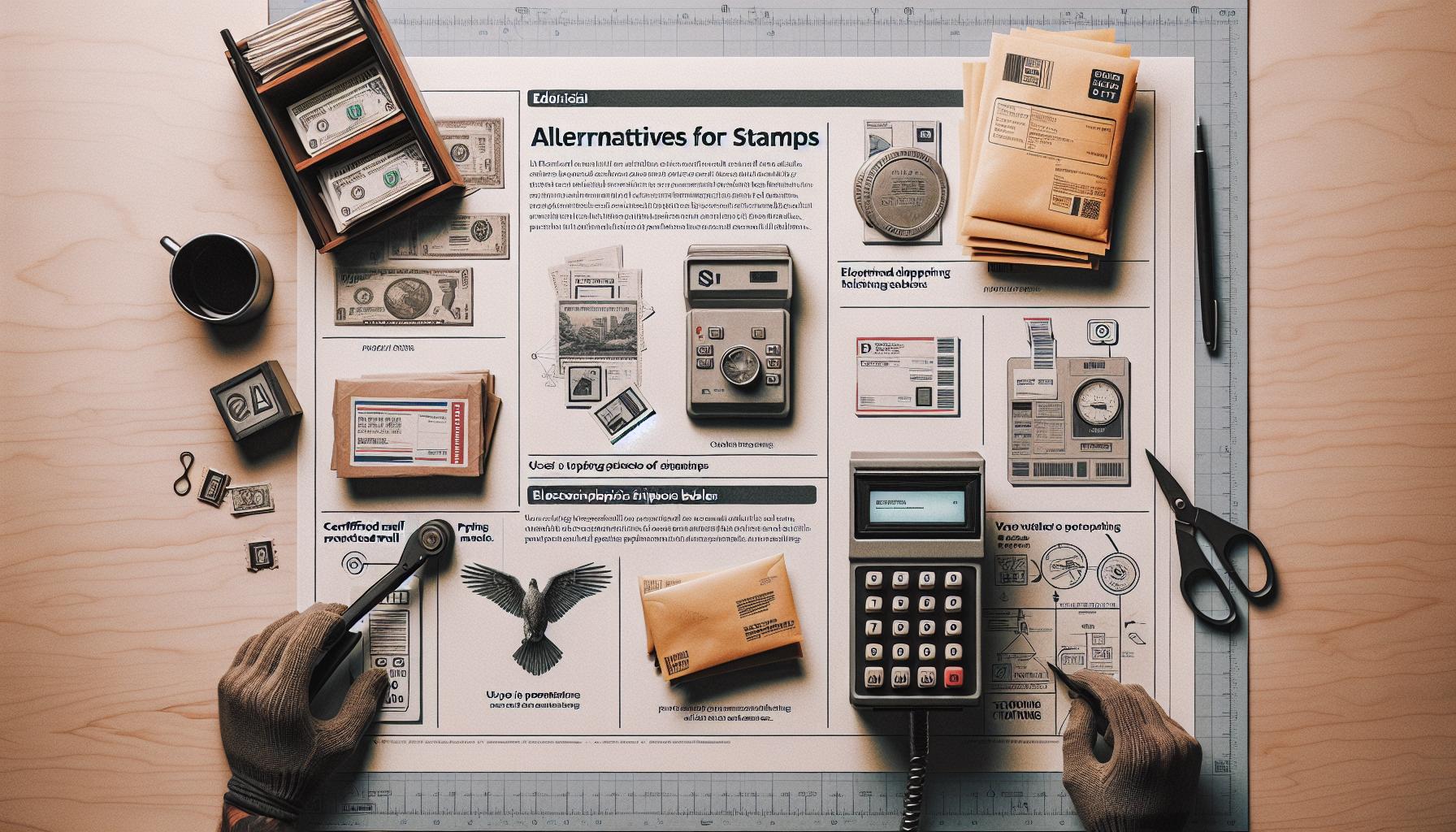
Step-by-Step Guide to Preparing Certified Mail Correctly
Preparing certified mail properly may seem daunting at first, but with the right approach, it becomes a straightforward, reliable process that guarantees your important documents reach their destination securely and with full tracking. The key is understanding that postage payment-whether via traditional stamps or modern alternatives-must be clearly indicated and compliant with USPS standards, as certified mail combines mailing, tracking, and delivery confirmation into one seamless service.Start by selecting your certified mail form or label. If you’re using a physical USPS Certified Mail form (PS Form 3800), it must be firmly attached to the front of the envelope, ideally about 3½ inches from the top right corner to leave room for postage imprint [[1]](https://multimediaprint.psu.edu/sites/multimediaprint/files/2023-10/Certified%20Mail%20Instructions_0515_A11Y.pdf). If you prefer a digital option, many online postage providers or USPS-approved platforms allow you to print a single label that consolidates postage, certified mail service, and tracking barcodes. This method is typically faster and reduces human errors by automating fee calculations and label placement [[3]](https://help.stamps.com/hc/en-us/articles/21040473190555-Send-Certified-or-Registered-Mail).
Practical Steps to Follow
- Step 1: Prepare your mailing piece. Make sure your envelope or package is securely sealed and clearly addressed. Avoid wrinkled or damaged surfaces as barcodes and stamps need to be scanned efficiently.
- Step 2: Attach payment and labels. Affix postage using either traditional stamps, metered postage marks, or a printed digital indicia label. If you attach the paper certified mail form,write or print the recipient’s address on it if not pre-printed.
- Step 3: Complete the Return Receipt if needed. If you want proof that the recipient received your mail, attach PS form 3811 (green card) or choose the electronic return Receipt option online.
- Step 4: Review and send. Double-check all labels and forms are firmly attached without covering critical information. If using physical forms, do not fold or crease barcode sections.
- Step 5: Mail your item. You can drop certified mail directly into a USPS blue collection box if postage is prepaid and in proper form, but often it’s safest to hand it over at the post office to ensure it’s accepted as certified mail and the fee is recorded.
Common Scenarios and Tips
Consider a small business sending legal notices. Using an online postage provider to print meter-licensed certified mail labels allows for batch processing dozens of letters daily, each automatically logged and tracked without individual post office trips. In contrast, occasional senders can use USPS’s official forms and traditional postage without complication, provided that placement and legibility meet requirements.
| Tip | Reason |
|---|---|
| Place certified mail form and postage near the top-right corner | USPS machines scan this area first to verify postage and certification |
| Use a flat, non-crinkled surface | Ensures barcode readability and prevents mail downtime |
| Print postage digitally when possible | Saves time, reduces errors, and integrates tracking effortlessly |
| Retain your receipt and tracking number | Essential for monitoring delivery and proof of mailing |
By following these practical steps and paying attention to readiness details, certified mail becomes not just a delivery method but a powerful tool for sending important documents securely while ensuring receipt verification. Whether you opt for traditional stamps or the latest digital alternatives, adherence to USPS guidelines guarantees smooth processing and reliable service every time.
Common Mistakes When Sending Certified Mail Without Stamps
One of the most common pitfalls when sending certified mail without traditional stamps is assuming that postage can be wholly omitted. Certified mail requires postage payment just like any other mailing service, whether through stamps, metered postage, or printed digital indicia. Failing to affix or print any form of postage results not only in delayed delivery but frequently enough a return to sender or even rejection by USPS at intake. This misstep often happens when senders rely solely on the certified mail receipt or label, which itself does not cover postage fees but only tracks the mailing service [[1]](https://www.simplecertifiedmail.com/blog/certified-mail-education/does-certified-mail-require-a-stamp/).
Another frequent error involves improper placement or unclear payment markings. When digital postage or meter marks are used instead of stamps, they must be clearly visible in the top-right section of the envelope.Covering or placing labels haphazardly can confuse automated sorting machines, causing misreads or delays. For example,some senders attach the certified mail sticker but neglect to print or affix postage near it,believing the certification fee alone covers postage. USPS machines do not process certified mail forms as proof of postage; these are strictly tracking devices, so payment must be separately indicated and scannable [[2]](https://www.mysticstamp.com/fa1-1955-15c-certified-mail/).
A less obvious but impactful mistake is not verifying the payment method’s validity with USPS standards before mailing.Some businesses attempt to save time by printing postage labels at home without confirming if their permit or postage accounts are active or correctly linked to certified mail fees. This can lead to rejected mail batches and costly reprocessing. Moreover, envelopes with smudged or faded meter imprints compromise barcode readability, and these issues are more common without traditional stamps. The solution here is to print postage with up-to-date software or USPS-approved online services that ensure proper encoding for certified mail services [[3]](https://store.stamps.com/collections/certified-mail).
- Neglecting to include postage with certified mail forms – Certified mail labels do not replace postage.
- Improper placement of digital postage or meter marks – Must be in upper right corner and not obstructed.
- Using outdated or unauthorized postage printing methods – can cause rejection or delays.
- Poor label or imprint quality - Smudged barcodes prevent tracking and timely processing.
Being aware of these nuances and avoiding these mistakes ensures smooth USPS acceptance and timely delivery. Always remember that certified mail service fees (about $5.30 currently) are along with postage and both must be paid in the approved manner to comply fully with postal rules[[1]](https://www.simplecertifiedmail.com/blog/certified-mail-education/does-certified-mail-require-a-stamp/).
Tracking and Proof of Delivery: How Certified Mail Works
The power of certified mail lies not just in its secure delivery but crucially in the detailed tracking and proof of delivery it provides-features that many users rely on to confirm that important documents have safely reached their intended recipients. When you send certified mail, you receive a unique tracking number that acts like a digital fingerprint for your package or letter. This number allows you to monitor your item’s journey from the moment it is accepted by the USPS until final delivery, giving you peace of mind and concrete evidence of your mailing transaction.
Certified mail tracking updates are designed to be clear and informative. Shortly after you hand over your item,you may see a status like “origin Acceptance,” which confirms USPS receipt and the start of processing. As USPS handles the mail, updates such as departure scans from processing centers and arrival scans at the destination post office provide ongoing visibility. Once delivered, your recipient’s signature is captured and recorded as proof of delivery, accessible either online or via mailed return receipt options, depending on what service you choose. This chain of information is vital in legal and business contexts where proof that a document was received can protect your rights or confirm compliance.It’s important to remember that the certified mail label itself doesn’t serve as postage-it’s strictly a tracking mechanism. Proper postage must accompany your certified mail, whether through stamps, metered postage, or digital indicia, so the item is accepted and processed without delay. Without valid postage clearly displayed, certified mail can be rejected or sent back, nullifying your tracking efforts and leaving you without the proof you need. One practical tip is to always verify that your postage markings are legible and positioned correctly (typically the upper right corner), ensuring automated USPS machines can scan and process your item efficiently.
- Track using the unique tracking number to follow every step of your mail’s journey in real time.
- Check for receipt and processing updates like “Origin Acceptance” to confirm USPS’s handling stages.
- Ensure postage is properly affixed-certified mail labels alone don’t pay for mailing services.
- Request a return receipt if you need documented confirmation of delivery and signature proof.
By understanding these tracking nuances and combining certified mail labels with appropriate postage, you unlock a reliable system that not only guarantees your mail is delivered but also firmly documents every step along the way. This dynamic service turns sending mail into a much more accountable and transparent process, making certified mail an indispensable tool for those who need dependable proof of their communication.
Costs and Fees Associated with Certified Mail Services
Certified Mail offers more than just a receipt; it brings a reliable legal and practical layer of accountability-but it does come at a cost beyond standard postage. Understanding these fees is essential to budgeting properly and avoiding unexpected expenses, especially if you’re sending multiple certified items or managing a business mailing process.
The base fee for Certified Mail service currently stands at $5.30 as of 2025, reflecting a $0.45 increase from previous rates. This fee is fixed regardless of the size or weight of the mailpiece-it applies equally whether you send a small envelope or a larger parcel. It’s important to know that this base charge is in addition to the regular postage required to mail the item itself. for example, sending a standard first-class letter via Certified Mail means paying standard postage (like a Forever stamp or metered rate) plus the $5.30 Certified Mail fee, effectively layering the service on top of normal mailing costs [[2]](https://www.simplecertifiedmail.com/usps-postal-rates/).
- Certified Mail Fee: $5.30
- Standard Postage: Varies by mail class/weight (e.g., $0.66 for a letter stamp in 2025)
- Return Receipt (optional): Typically around $3.90 for a mailed receipt or $1.50 for an electronic receipt
- Restricted Delivery (optional): Additional $4.45 if you require the mail to be delivered only to a specified recipient
Practical Tips for Managing Certified Mail Costs
If you regularly send Certified Mail, consider bulk indicia or automated shipping solutions that can reduce both labour and postage costs. Automation not only speeds up the preparation process but sometimes unlocks discounted postage rates through commercial pricing agreements. Moreover, scrutinizing the necessity of adding extras like Return Receipt or restricted Delivery can definitely help manage budget without compromising the core certified tracking and proof of delivery benefits [[1]](https://mail.quadient.com/en/blog/how-save-usps-certified-mail-costs).For occasional users, buying and affixing individual postage stamps remains a straightforward method, but remember that the certified mail fee itself cannot be covered by stamps alone.It must be paid as a separate service charge, typically handled at the counter or through digital postage platforms. always check receipts or digital confirmations to ensure that both postage and certified fees are properly accounted for to avoid delays or returns.
| Service | 2025 Fee (USD) | Notes |
|---|---|---|
| Certified mail | $5.30 | Flat fee per mailpiece |
| Standard Postage (1 oz.letter) | Varies ($0.66 approx.) | required in addition to certified mail fee |
| Return Receipt (electronic) | $1.50 | Optional proof of delivery via email |
| Return Receipt (mailed) | $3.90 | Physical mailed receipt of delivery acknowledgment |
| Restricted Delivery | $4.45 | Ensures delivery to addressee only |
By factoring in these costs upfront, you can better decide when Certified Mail is the right fit for your mailing needs and budget. Whether for legal documents, sensitive communication, or proof-of-delivery requirements, certified Mail’s added value justifies the incremental cost and remains a trusted option for important correspondences.
When to Use Certified Mail Over Other Mailing options
There are times when using certified mail is not just a convenience but a necessity, particularly when proof of mailing and delivery is essential. Unlike standard mail services, certified mail provides senders with an official receipt and a legally recognized chain of custody-making it indispensable for sensitive or time-critical documents. For example, attorneys, landlords, and businesses frequently enough rely on certified mail when sending notices, legal papers, or contracts that require verifiable proof that the recipient received the documents.
Certified mail excels in situations where accountability and documentation are paramount.If you require confirmation that your mail was delivered to the correct recipient and need to track its journey through the postal system, certified mail is the superior choice. compared to regular first-class mail, which offers no delivery confirmation, certified mail adds an critically important layer of security and peace of mind. Additionally, when your mailing involves compliance or regulatory deadlines, certified mail’s precise tracking helps avoid disputes or misunderstandings about whether and when the item was received.
- Legal or business correspondence: sending contracts, court notices, or debt collection letters.
- Important financial documents: checks, notices of payment due, or tax forms that require proof of delivery.
- Critical time-sensitive communications: deadlines where timing and confirmation impact outcomes.
- Situations requiring restricted delivery: ensuring mail is received only by the individual named.
Compared to options like certified mail, services such as regular first-class mail or even priority mail lack built-in proof of delivery and tracking features at an affordable price point. While Priority Mail offers faster delivery, it doesn’t inherently include certified mail’s legal proof protections unless you pay extra for tracking and signature confirmation. Therefore, choosing certified mail is often a strategic decision based on the need for documented accountability rather than just speed.
In practical terms, certified mail is worth the additional cost when the consequences of non-delivery or delayed delivery could have notable financial or legal repercussions. As an example, a landlord notifying a tenant of a lease violation or eviction must send the notice in a way that can be verified in court. Similarly, businesses mailing compliance documents avoid risking penalties by using a service that proves the date and addressee.
Balancing Cost with need
While the $5.30 certified mail fee (plus postage) may seem steep compared to standard mailing costs, the benefits often outweigh expenses-especially in contexts where the extra assurance is invaluable. For casual or personal mailings without any critical timing or proof requirements, standard mail suffices. Though, when delivery confirmation, proof of handling, or recipient signature matters, certified mail stands out as the clear solution.
certified mail is best selected when you need reliable, verifiable proof that a mailing was sent and received under USPS custody, something standard postage and stamps alone cannot guarantee. This understanding ensures you choose the right service for your needs-balancing cost, security, and peace of mind effectively.
For more insight into how certified mail integrates with postal rules and the payment of postage, it’s helpful to remember that while certified mail requires payment of standard postage (via stamps or other methods), the certified mail fee itself is an additional charge payable at mailing or through authorized postage platforms[[1]](https://phasev.com/blog/what-is-certified-mail/) [[2]](https://www.simplecertifiedmail.com/usps-postal-rates/).
Tips for Ensuring Your Certified Mail Meets USPS Standards
Few mailing procedures require the precision and accountability that certified mail demands. Ensuring your certified mail meets USPS standards means paying close attention not just to postage, but also to packaging, labeling, and documentation. Many senders mistakenly assume that just affixing postage is enough, but certified mail involves additional steps that protect you legally and ensure smooth processing.
Stay meticulous with your postage payment: certified mail always requires the regular postage amount for the item being mailed (whether via stamps, printed postage from online services, or postage meter labels), plus the certified mail fee as an extra charge.Skipping or underpaying postage will delay or return your mailpiece. Remember, the certified mail fee covers the service and cannot replace postage itself. USPS requires the combined payment to be clear and legible to accept your mail without rejection [[3]](http://postalpro.usps.com/certified-mail-guidebook).
Properly complete and attach the certified mail form (PS form 3800) or use electronic labels.The receipt or label contains a unique barcode that enables tracking and proof of mailing. When filling out these forms,ensure that recipient and sender addresses are accurate and readable to avoid delivery issues. If you submit your certified mail at a USPS location, request the official receipt that proves when you mailed the item-it can be crucial in legal and business contexts.
- Use durable, appropriately sized envelopes or packages: Thin envelopes can get damaged or lost. Bulkier mail with proper protective packaging reduces risk of loss or damage.
- Verify that your address information is clear: illegible handwriting or smudged printings can slow the process or cause misdeliveries.
- Retain all receipts and tracking numbers: Certified mail provides tracking information that you can monitor online or by phone. Keeping receipts lets you verify mailing dates and delivery status over time.
For frequent users or businesses, consider integrating USPS-approved electronic postage solutions to speed processing and reduce human error. These services accommodate certified mail fees and postage combined, frequently enough generating barcoded labels that the USPS can scan instantly. This minimizes guesswork about whether enough postage was applied or if the certification label is valid.
resist shortcuts like sending certified mail without any postage or relying solely on certified mail labels without paying the required fees. such mistakes can invalidate your proof of mailing or result in return or delays. Certified mail works best when all USPS standards and fee requirements are followed carefully-doing so protects your interests and maintains the rigorous accountability that makes certified mail invaluable in sensitive transactions.
Frequently Asked Questions
Q: Can Certified Mail be sent without a traditional postage stamp?
A: Yes, Certified Mail can be sent without a traditional postage stamp if you use USPS-approved labels or print postage online. Certified Mail service fees must be paid via postage printed through USPS or authorized vendors, which frequently enough include an Intelligent Mail barcode and Certified Mail label for compliance. For detailed steps, see the Alternatives to Stamps for Certified Mail section.
Q: What happens if Certified Mail is sent without any postage or label?
A: Certified Mail without postage or an authorized label will be rejected or returned by USPS. Proper postage or a printed Certified Mail label is necessary to cover mailing and service fees. Always verify your Certified Mail includes payment to avoid delivery delays-refer to Common Mistakes When Sending Certified Mail Without Stamps for tips.
Q: How can I pay for Certified Mail without using a physical stamp?
A: You can pay for Certified Mail online using USPS Click-N-Ship or authorized third-party services. These platforms generate digital postage and Certified Mail labels that fulfill postal requirements without the need for physical stamps, streamlining preparation. Review the Step-by-Step Guide to Preparing Certified Mail for complete instructions.
Q: Why does Certified Mail require a specific label instead of just a regular stamp?
A: Certified Mail requires a unique green label with a barcode for proof of mailing and tracking, which regular stamps don’t provide. This label works alongside postage payment, ensuring USPS can scan and track your mail accurately. Learn more in the Understanding Certified Mail and Its Postal Requirements section.
Q: Is it possible to use a regular postage stamp along with Certified Mail service?
A: Yes, while traditional stamps can pay for the postage, Certified Mail requires the extra Certified Mail label for tracking and proof of delivery. The stamp covers postage, but the Certified Mail service fee is a separate charge applied via the label or printed postage.
Q: How does USPS process Certified Mail without barcoded stamps?
A: USPS processes Certified Mail using the Intelligent Mail package barcode (IMpb) on labels instead of individual barcoded stamps. These barcodes are essential for tracking and postal routing, replacing the need for traditional barcoded stamps in Certified Mail service [1].
Q: When should I consider using Certified Mail with printed postage over a stamp?
A: Use printed postage to avoid errors and ensure compliance, especially when sending high volumes or important documents.Printed Certified Mail labels include tracking features unavailable with stamps, providing greater security and USPS confirmation. Visit the when to Use Certified Mail Over Other Mailing Options for more advice.
Q: Can I print Certified Mail labels at home, and do they replace stamps?
A: Yes, you can print Certified Mail labels at home using USPS online services or certified vendors. These labels include postage and unique tracking barcodes, effectively replacing traditional stamps for Certified Mail and simplifying mailing preparation [3]. See Tips for Ensuring Your Certified mail Meets USPS Standards for best practices.
Wrapping Up
Understanding whether certified mail needs a stamp is crucial for ensuring your important documents are delivered securely and tracked properly. While the rules can vary depending on services and regions, the key is to follow proper postal guidelines to avoid delays or issues. If you’re ready to streamline your mailing process, consider exploring our detailed guides on how to track certified mail effectively and tips for sending legal documents via mail for added confidence.
To deepen your understanding, check out our resources on postal service updates and mailing best practices-these insights can definitely help you stay ahead with the latest postal rules and customer protections. Don’t forget to subscribe to our newsletter for real-time updates and expert advice to keep your mailing tasks hassle-free.If you still have questions or unique cases, feel free to leave a comment or reach out for personalized assistance. Your trusted guide through postal intricacies is just a click away-explore more now and never miss an critically important delivery again!