
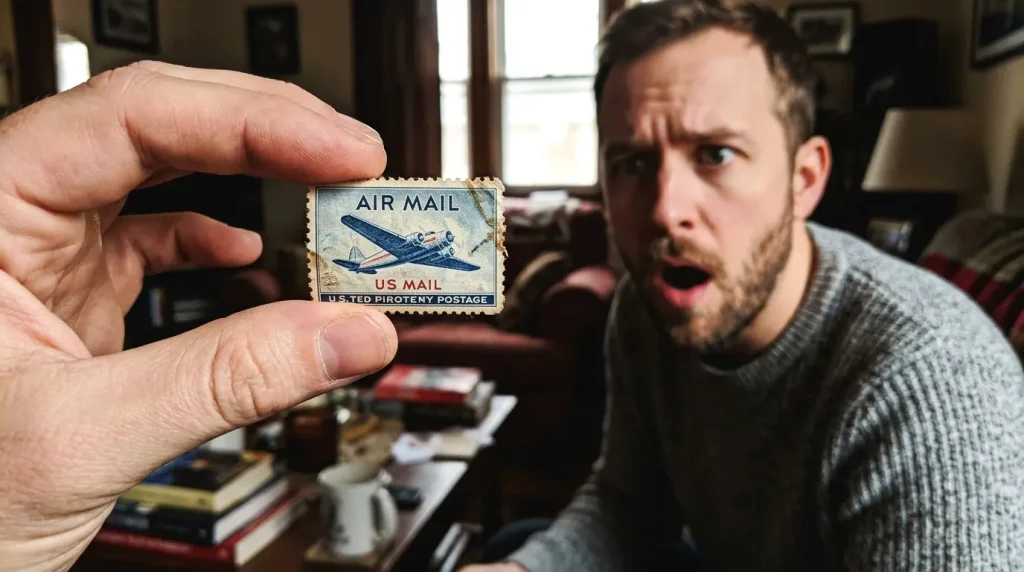

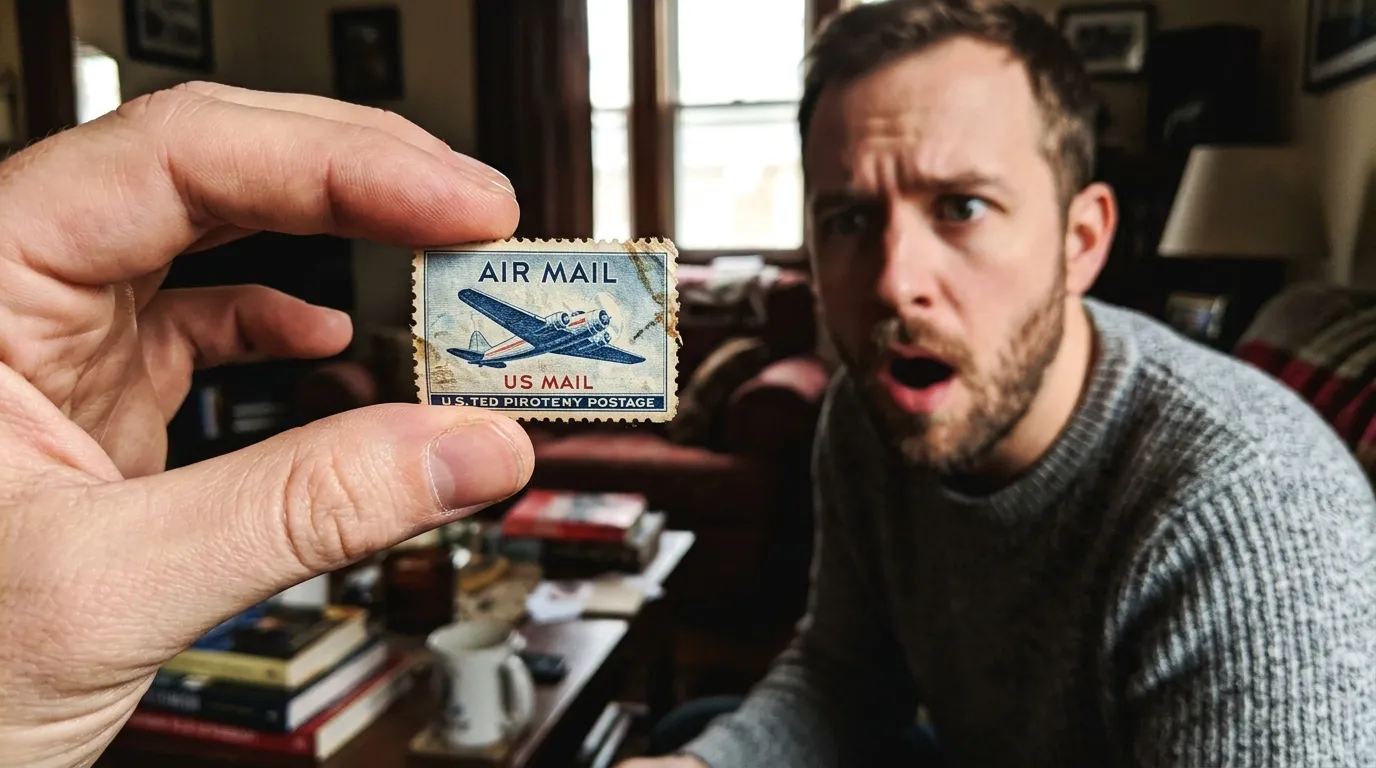
An air mail stamp is a specific type of postage designed exclusively to pre-pay the higher fees required for transporting letters via aircraft. While common versions carry a face value of just a few cents, rare errors frequently fetch millions at auction.
An air mail stamp is a specific type of postage designed exclusively to pre-pay the higher fees required for transporting letters via aircraft. While common versions carry a face value of just a few cents, rare errors frequently fetch millions at auction.
Many people inherit a dusty stamp collection from a grandparent and assume it holds nothing but old paper.
They flip through the fragile pages. They see intricate designs but fail to understand the complex appraisal data.
A seemingly ordinary envelope from the 1920s might look entirely worthless at first glance.
But a single detail, which most people completely overlook, decides whether that scrap of paper is a trivial keepsake or a museum-quality artifact. And you will find that exact detail in the section below.
What Is an Air Mail Stamp and How Much Is It Worth?
An air mail stamp is a specialized postal issue created specifically to fund the airmail service. Regular stamps covered slow ground transport.
These specialized stamps paid for the expensive logistics of flying mail across oceans and continents securely.
For most everyday issues printed in massive volumes by the US Postal Service (USPS), the catalog value often hovers just slightly above the original face value.
You can buy many of these common issues for under five dollars. Millions were produced, saturating the market entirely.
However, the market for rare stamps behaves entirely differently. Driven by soaring collector demand in 2026, finding a unique printing flaw transforms a basic item into a fortune.
A slight color shift or a missing perforation alters the value dramatically.
The Fascinating History of the Airmail Service
Aviation history experienced a massive shift when governments realized planes could move mail faster than trains.
The airmail service officially launched in the early 20th century. This bold innovation transformed global communication overnight, connecting distant cities in hours.
Pioneers like Otto Praeger pushed aggressively for a reliable postal route across the United States.
Pilots faced treacherous weather and flew highly unreliable aircraft.
Surviving that initial first flight required immense courage and incredible technical skill.
Understanding this dangerous history is crucial for any serious collector.
Enthusiasts highly prize items directly tied to these early, dangerous routes.
If you want to explore how these early designs evolved, exploring the 6 cent airmail history provides a perfect snapshot of this golden era.
The Most Valuable Rare Stamps in Aero-Philately
Aero-philately (the specialized study of air mail stamps) boasts some of the most expensive collectibles in human history.
The absolute holy grail for any serious collector is the legendary Inverted Jenny.
This famous 1918 issue features a blue biplane accidentally printed completely upside down.
Because only a single sheet of 100 error stamps reached the public, its scarcity drives extreme valuations today.
An Inverted Jenny in pristine condition recently secured a record-breaking auction price of over $2 million. Investors treat them like fine art.
This level of intense demand reflects broader rare airmail market trends perfectly.
Serious investors actively hunt for these specific errors because they offer incredible financial returns over time.
5 Steps to Identify Your Vintage Air Mail Stamp
Before you guess the worth of your collection, follow these precise steps to identify your assets accurately:
- First, examine the printed face value carefully. A classic 11 cent airmail stamp often features unique historical artwork that pinpoints its exact release year.
- Second, check the physical state. A stamp in mint condition (never used, retaining original adhesive gum) typically holds significantly higher value than one in used condition. Buyers demand perfection.
- Third, look for etiquettes (small blue or red “Par Avion” labels attached to an envelope). They add critical historical context.
- Fourth, keep the airmail cover completely intact. Never peel an old stamp off its original envelope. The complete package proves its authenticity.
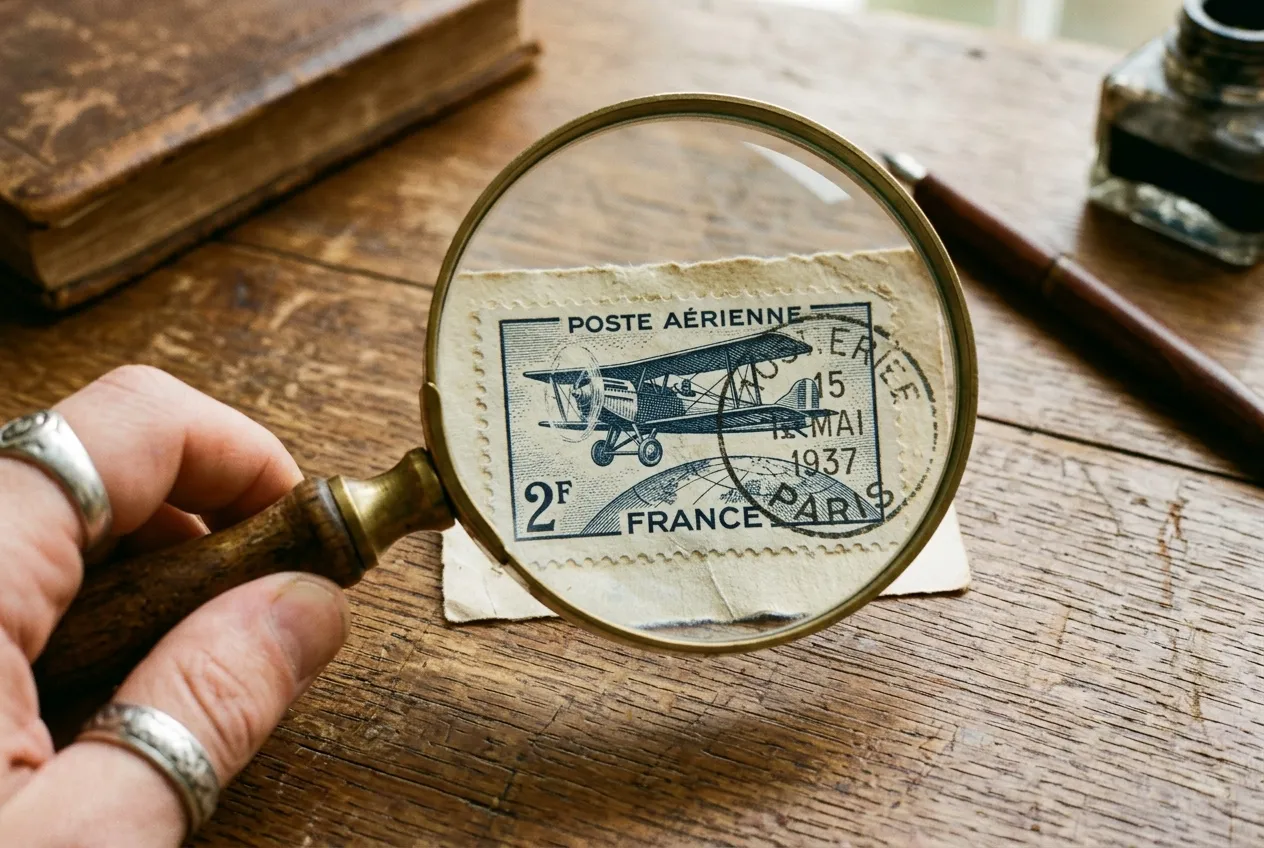
- Fifth, use a magnifying glass to identify hidden paper watermarks.
How to Determine the Exact Catalog Value of Your Collection
Finding the true catalog value of your stamp collection requires more than a simple internet search.
The field of Philately relies heavily on established, standardized price guides. These guides factor in rarity, print centering, and current buyer demand meticulously.
Start by consulting a trusted 2026 philately catalog to establish a solid baseline figure.
However, you must remember that a catalog only lists theoretical retail prices. To gauge what buyers actually pay, track recent auction results for your specific issue.
If your binder holds high-grade pieces, understanding the current vintage airmail stamps value will dictate your next move. You can then decide confidently whether to hold or sell the collection.
| Condition Factor | Impact on Catalog Value |
|---|---|
| Mint Condition | Highest value; requires untouched original gum and perfect centering. |
| Used Condition | Generally lower value, unless featuring a rare or historic cancellation mark. |
Common Myths About Old Postage Rates and Stamp Collections
Many beginners falsely assume that extreme age automatically guarantees high financial value.
The printed postage rate simply indicates what it cost to mail a letter decades ago. It rarely reflects current market demand or scarcity.
Governments printed millions of stamps during the 1930s and 1940s. Consequently, these specific issues remain extremely common today.
Another prevalent myth suggests that any stamp from a famous historical event will fund your retirement quickly.
In reality, value depends entirely on verified scarcity. Unless the stamp features a documented printing error or survives in flawless condition, its worth remains strictly tied to actual demand within the philately community.
Air Mail Stamp vs Standard Postage: Key Differences Explained
The primary difference lies in their original purpose and visual design. Standard postage facilitated ground or sea transport efficiently.
These traditional stamps usually featured stately portraits of presidents, monarchs, or significant national monuments.
Conversely, an air mail stamp specifically paid the much higher fees required by the new airmail service.
Designers explicitly created vibrant artwork featuring airplanes, globes, or flying eagles to visually signify flight. This made sorting mail significantly faster for busy postal workers.
Today, you can technically use both types for mailing letters if they remain entirely unused. However, collectors strictly categorize and appraise them differently based on their distinct aviation heritage and historical significance.
What to Do Next With Your Stamp Collection
Inheriting or discovering a binder of old stamps begins a fascinating historical journey for you.
By accurately identifying the exact issues and preserving their delicate condition, you unlock the true story behind each piece.
Protect your rare stamps from destructive moisture and direct sunlight constantly. You must never handle them directly with your bare hands.
Use specialized philatelic tongs to prevent damaging the fragile paper fibers.
Store them securely in archival-quality albums designed specifically for preservation. If you suspect you hold a highly valuable error, contact a certified appraiser immediately. They will guide your next crucial steps.
Frequently Asked Questions
Are old air mail stamps worth any money today?
Yes, while many common air mail stamps are worth face value, rare stamps like the Inverted Jenny can fetch millions at auction price. The catalog value heavily depends on mint condition, rarity, and historical significance. Identifying specific flaws or unique etiquettes can greatly increase their worth. Read more about rare airmail market trends.
How do I find the catalog value of my airmail stamp collection?
To find the accurate catalog value of your stamp collection, you should consult recognized philately guides or an expert appraiser. Look for the specific issue year, face value, and whether it is in mint or used condition, as these factors determine the final auction price. Check out the vintage airmail stamps value.
Can you still use an old air mail stamp for postage?
Most unused air mail stamps issued by the US Postal Service remain valid for standard postage today, equal to their printed face value. However, using a rare stamp in mint condition on mail could destroy its potential auction price and value in philately.
What is the most expensive air mail stamp ever sold?
The most expensive air mail stamp is the 1918 Inverted Jenny, which features a misprinted upside-down airplane. Due to its extreme rarity and prominence in aviation history, exceptional copies in mint condition have reached over $2 million at recent auction sales.
What are etiquettes on an airmail cover?
Etiquettes are the small blue or red labels, often reading ‘Par Avion’ or ‘Air Mail’, applied to envelopes to designate them for the airmail service. While not stamps themselves, they are highly collectible on an original airmail cover from a first flight.
Get our latest guides, news, and insights highlighted in your Google Search & AI Overviews.


