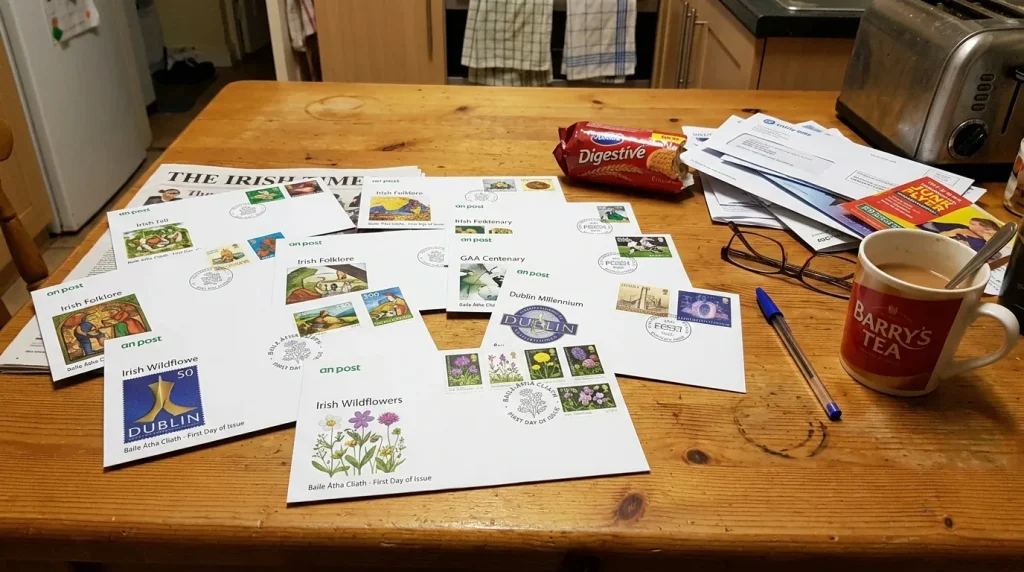

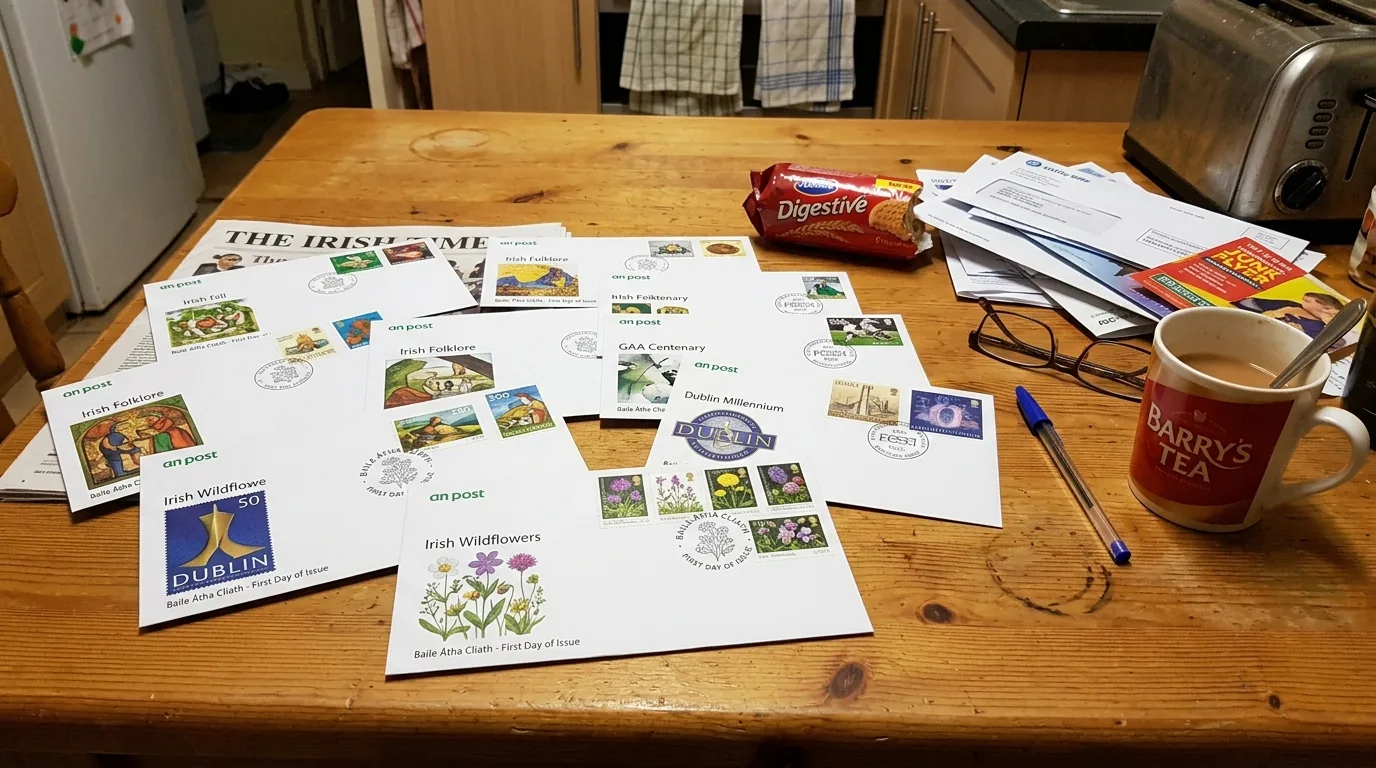
An Post first day issues are specially postmarked envelopes featuring newly released Irish stamps. They are officially cancelled on their exact issue date.
Do you know which tiny detail separates a standard cover from a highly valuable rarity?
What Are An Post First Day Issues?
A First Day Cover (FDC) is an envelope bearing a stamp cancelled on its first day of sale. The An Post Philatelic Bureau issues these officially to satisfy intense global collector demand.
They combine a Commemorative Stamp or a Definitive Stamp with an envelope featuring unique artwork. This artwork often connects directly to the stamp’s subject matter, creating a cohesive visual package.
The cancellation mark ties the stamp to the envelope permanently. This proves the stamp was sold and serviced on that specific historical date.
The official Yearbook often documents these releases, providing a reliable reference for serious collectors. You can verify the authenticity of your covers by cross-referencing these official publications. This verification step protects you from purchasing counterfeit or improperly serviced envelopes.
The History of Irish First Day Covers and Commemorative Stamps
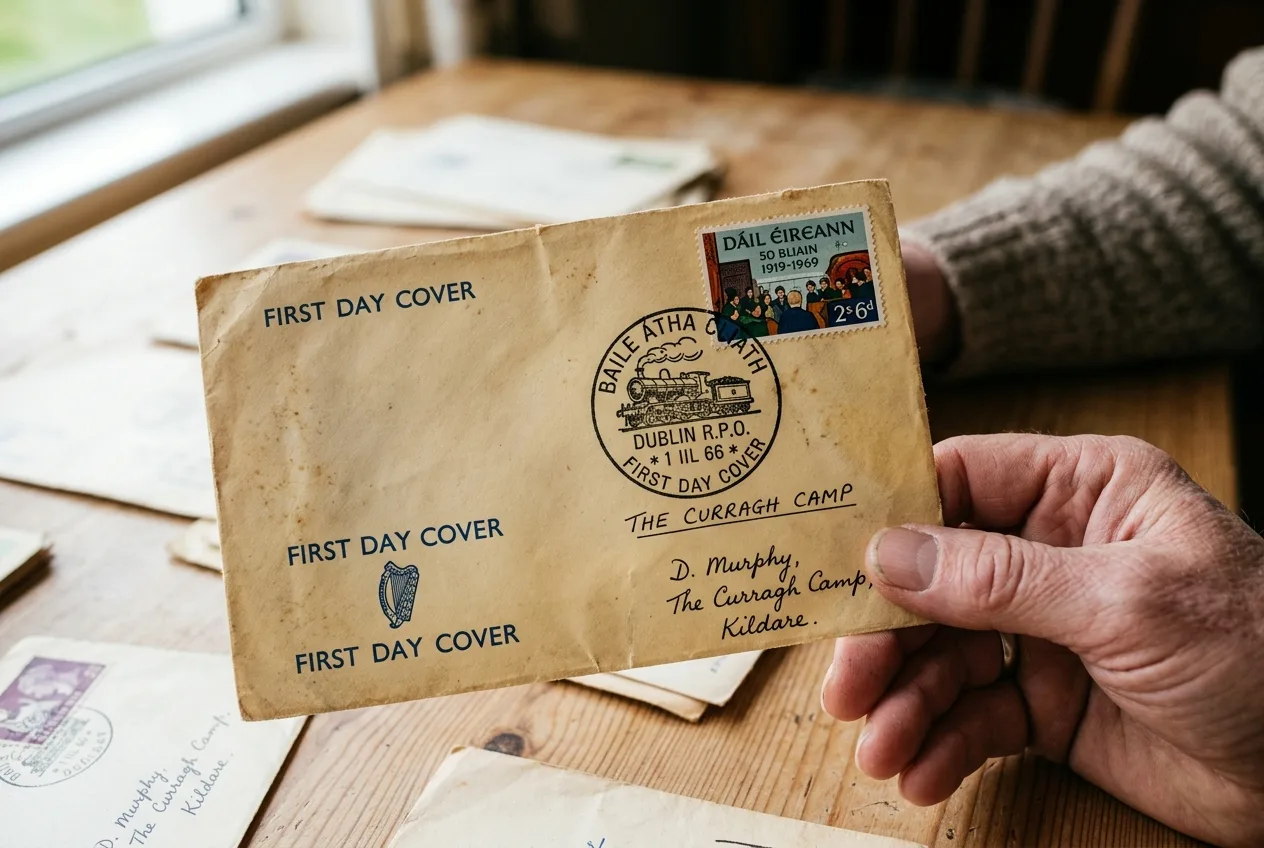
Ireland began issuing independent postage in 1922 following the Anglo-Irish Treaty. Early covers were mostly unofficial creations made by enthusiastic private collectors.
The General Post Office did not produce official pictorial covers until decades later. Understanding the history of Irish stamps helps you spot valuable early editions immediately.
Unofficial covers from the 1940s and 1950s often fetch exceptionally high prices today due to absolute scarcity. The transition to official An Post FDCs eventually transformed the hobby entirely.
Navigating the Secondary Market and Realized Prices
Finding true value requires studying the secondary market with extreme care. You cannot rely solely on outdated catalog values or generic price guides.
Actual auction price data provides a much more accurate picture of current market demand. We track realized prices across major philatelic auction houses globally to spot emerging trends.
Condition, rarity, and historical context dictate the final hammer price. You will frequently see rare issues command massive premiums during specialized estate auctions.
Secondary market trends shift rapidly based on collector demographics and available supply. A cover ignored ten years ago might suddenly become the centerpiece of a major auction. You must constantly monitor realized prices to understand the true liquidity of your collection.
How to Identify Rare Issues and Special Postmarks
The secret to high valuation almost always lies in the postmark itself. A standard cancellation simply records the date and location of the original mailing.
A special postmark features unique artwork explicitly tied to a specific event or anniversary. Collectors aggressively hunt for rare pictorial postmarks from small or historically significant post offices.
- A clear, crisp cancellation significantly increases the overall value of the cover.
- Smudged, incomplete, or heavy ink strikes immediately reduce desirability and market price.
Examine the strike angle and the clarity of the town name on the postmark. Collectors pay substantial premiums for perfectly centered cancellations that leave the stamp artwork visible. Even a rare issue loses value if the postmark renders the underlying stamp unrecognizable.
Best Practices for FDC Preservation and Stamp Albums
Poor storage destroys philatelic value faster than anything else. Proper preservation guarantees your collection retains its visual appeal and financial worth for decades.
Never store vintage covers in:
- Standard plastic binders
- Acidic envelopes
- Cardboard shoeboxes
You must use a dedicated stamp album equipped with archival-quality, acid-free pages. Keep your entire collection away from direct sunlight, dust, and extreme humidity. This strict environment prevents foxing (brown age spots) and irreversible adhesive deterioration.
Common Misconceptions About First-Day-of-Issue Value
Many beginners falsely believe every old envelope automatically holds massive wealth. Philately (the systematic study and collection of stamps) requires far more analytical nuance.
Mass-produced first-day-of-issue covers from the 1980s usually carry minimal monetary value today. Millions of these entered circulation during the peak of the global collecting boom.
Rarity always trumps sheer age when determining actual market worth. A scarce, limited-run 1990s cover often vastly outvalues a common, mass-printed 1970s release.
Another misconception involves the physical condition of the envelope itself. A pristine modern cover will never outprice a moderately worn cover from the 1920s. Historical context and absolute scarcity dictate value far more than flawless modern printing techniques.
Evaluating Vintage Covers vs. Modern 2024 Releases
You must evaluate modern covers using entirely different criteria than older material. Both eras offer exciting investment opportunities if you know exactly what to seek.
Vintage Covers (Early 20th Century)
Early 20th-century covers rely heavily on the historical significance of the specific Postmark. A simple, faint cancellation mark from a closed rural post office holds deep historical weight. Condition matters, but absolute scarcity and historical context drive the highest valuations.
Modern Releases (2024)
An Post’s 2024 limited editions often feature highly elaborate designs, foil stamping, and vibrant themes. These modern releases heavily target pop culture fans, gamers, and centenary event celebrations. To hold value, they must remain in absolute pristine condition with complete original packaging.
The Future of Collecting An Post First Day Issues
The hobby continues to evolve dynamically as younger, specialized collectors enter the market. The demand for well-documented, pristine covers remains exceptionally strong despite rapid digital shifts.
We see massive growing interest in thematic collecting rather than simple chronological completion. Expanding your philatelic knowledge directly protects your investment and maximizes your personal enjoyment.
You should explore our comprehensive guide to collecting FDCs to build your advanced strategy. Start cataloging your collection today to secure its future value and uncover hidden gems.
Frequently Asked Questions
What determines the auction price of an An Post FDC?
The auction price of an An Post FDC depends on factors like the rarity of the cancellation mark, the condition of the envelope, and whether it features a highly sought-after pictorial postmark from a significant historical event.
How should I store my vintage covers for long-term preservation?
Proper preservation requires storing vintage covers in acid-free clear-wallets or a dedicated stamp album. Keep them away from direct sunlight, high humidity, and extreme temperatures to prevent fading, foxing, and deterioration of the adhesive over time.
Are modern first-day-of-issue stamps as valuable as older ones?
Modern first-day-of-issue stamps generally have a lower secondary market value than older ones due to higher print runs and intentional hoarding by collectors. However, limited edition commemorative releases or covers with rare printing errors can still command premium prices.
Where can I sell my collection of Irish first day covers?
You can sell your collection through specialized philatelic auction houses, online marketplaces, or directly to dealers. To maximize your return, research recent realized prices for similar items and ensure your collection is well-organized and properly appraised beforehand. Learn more about the value of rare postmarks.
What is the difference between a standard cancellation mark and a special postmark?
A standard cancellation mark simply voids the stamp for future use, usually showing the date and location. A special postmark, often pictorial, is specifically designed to commemorate an event or anniversary, making the cover significantly more desirable to collectors.
Error: Contact form not found.
Editorial Team | stampostage.info
Philatelic Research & Market Analysis
Editorial Transparency: This article was compiled by the stampostage.info editorial team using advanced AI data analysis to aggregate historical auction records and market trends. All facts, valuations, and preservation guidelines have been cross-referenced with established philatelic standards.
Get our latest guides, news, and insights highlighted in your Google Search & AI Overviews.