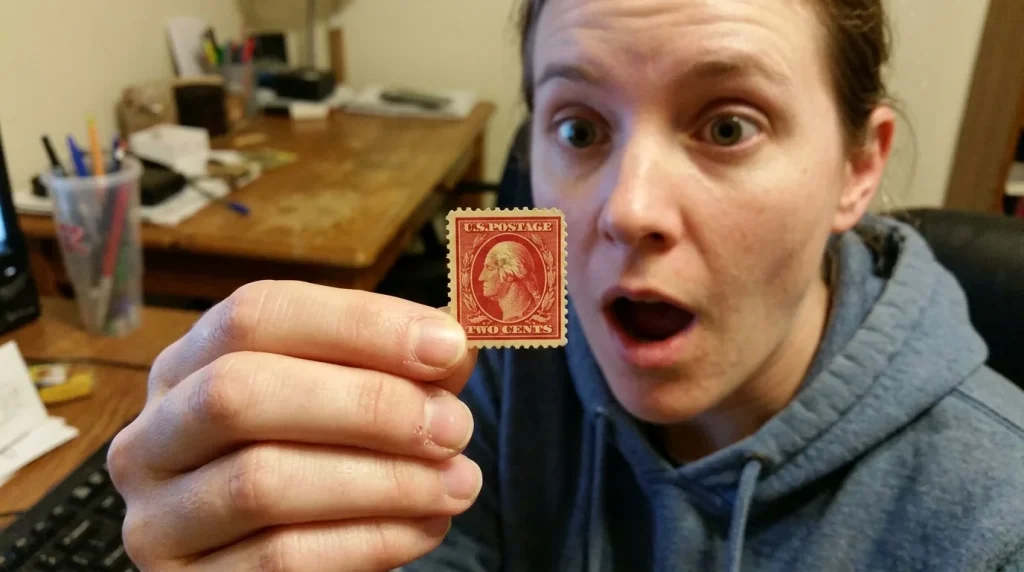

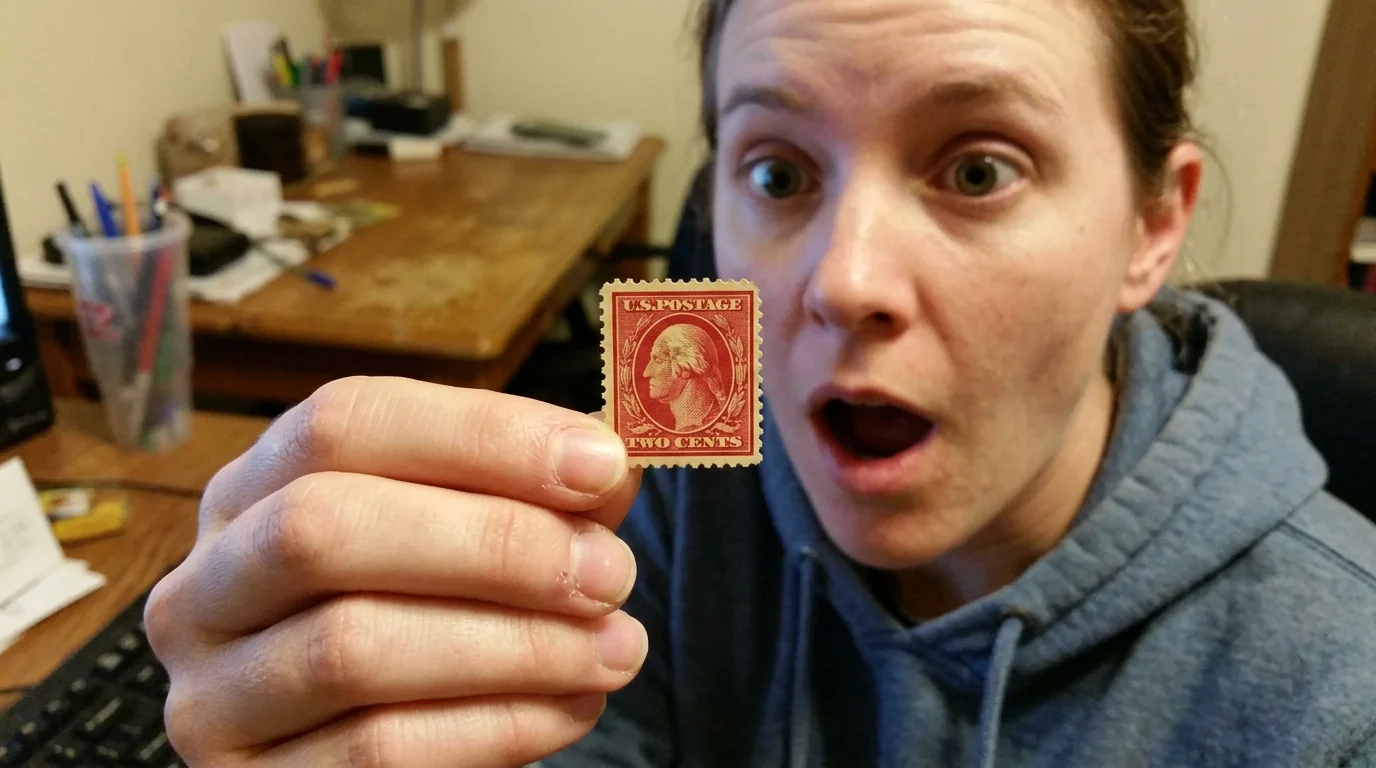
Finding the most valuable stamp us postage 2 cents requires looking past the common red design to spot tiny manufacturing errors. Millions of people discover an old George Washington stamp in their attic and wonder about a potential fortune. While most everyday discoveries hold little financial value, a select few hide a tiny secret that transforms them into auction-house legends.
We tested the most common identification methods to help you sort the treasure from the trash. One specific detail separates a worthless piece of paper from a five-figure windfall, and it takes just seconds to check.
Which 2-Cent US Postage Stamp is the Most Valuable?
Collectors constantly hunt for specific printing mistakes that survive in excellent condition. The 1923 Harding Memorial rotary press stamp stands out as an incredibly rare find.
The United States Postal Service accidentally printed a small batch using the wrong equipment. Experts estimate that fewer than 50 of these specific prints exist today.
These rare variations command massive premiums at modern auctions. Some pristine examples have sold for over $100,000 at public sale.
The sheer scarcity drives wealthy collectors into intense bidding wars. You can see similar jaw-dropping auction results in our guide to the most valuable United States stamps ever sold.
The History of the Washington-Franklin Issues
The government printed billions of 2-cent stamps during the early 20th century. The famous Washington-Franklin Issues dominated post offices across the country from 1908 to 1922.
The basic portrait design remained almost identical for 14 years. However, the postal authorities constantly experimented with different papers, inks, and printing machines behind the scenes.
This endless experimentation created a massive identification challenge for modern finders. A single visual design might actually represent 30 distinct catalog numbers.
World War I caused massive paper shortages, forcing the government to change paper qualities rapidly. If you look closely at these subtle changes, you might spot rare 2-cent red oval varieties hidden among standard mail.
Flat Press vs. Rotary Press: What Makes a Stamp Rare?
The printing method directly determines a stamp’s ultimate rarity.
Flat Press Printing
Early production relied entirely on the Flat Press method. This slow technique printed flat sheets of 400 stamps at a time. The paper remained completely flat during the ink transfer.
Rotary Press Printing
Later, the government introduced the Rotary Press to speed up mass production. This used curved metal plates fitted around a spinning cylinder. It printed continuous rolls of paper at high speeds.
The curved plates actually stretched the paper slightly during the printing process. This stretching creates the microscopic size differences that collectors pay massive sums to acquire.
How to Check Perforations at Home Without Pro Tools
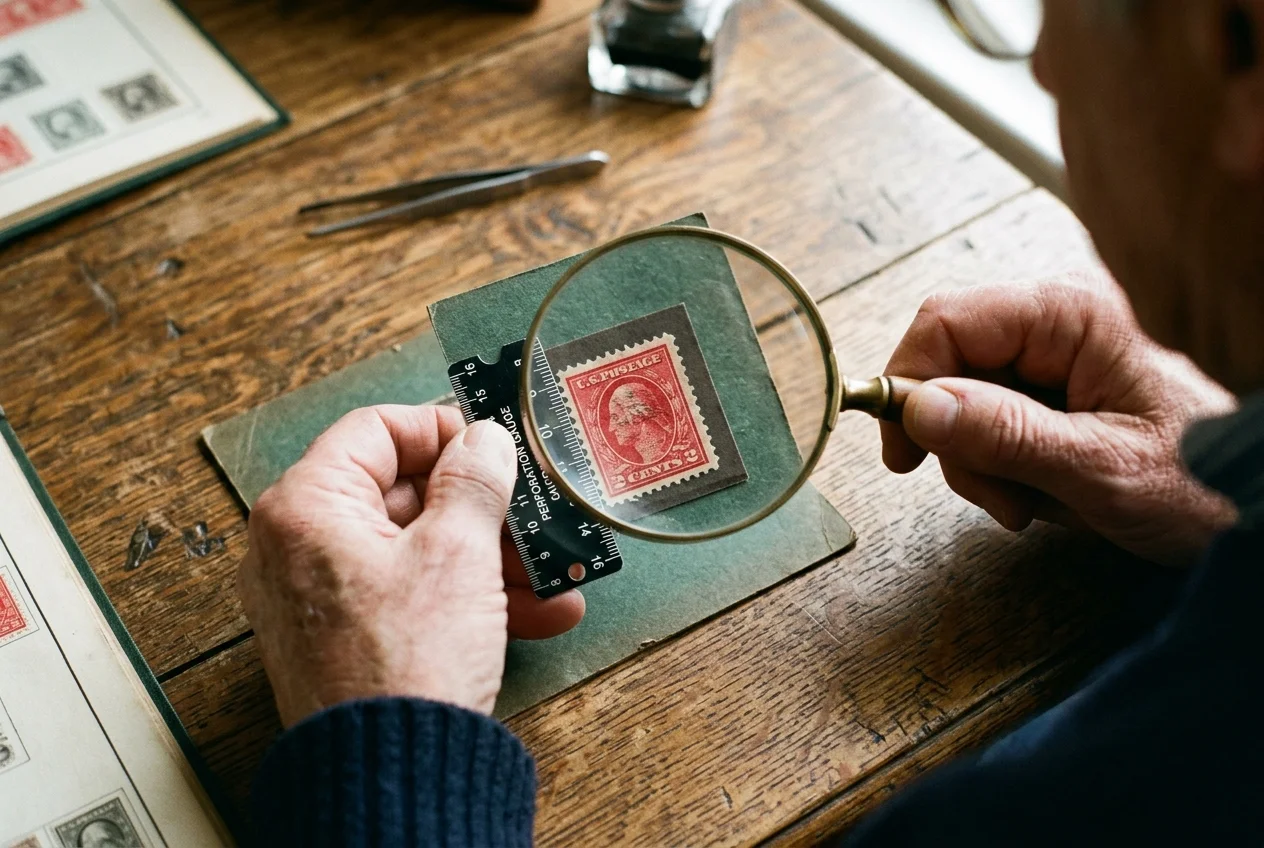
You can identify different printing methods by measuring the stamp’s edges. You need a simple perforation gauge to count the exact number of holes per two centimeters.
This affordable aluminum or plastic tool takes the guesswork out of measuring Perforations. Place your stamp flat against the gauge markings.
Slide the stamp up and down until the teeth match the black dots perfectly. Use a magnifying glass to check the exact alignment under bright daylight.
A difference of just half a perforation completely changes the catalog identification. Do not try to guess the measurement with a standard ruler.
Identifying Watermarks and Types (Type I vs Type II)
Another crucial identification step involves checking the paper itself. You must use specialized watermark fluid in a black plastic tray to reveal hidden symbols.
A faint Watermark of the letters “USPS” often proves the exact year of production. Do not use plain water, as it damages the paper fibers.
| Design Type | Key Identifying Feature |
|---|---|
| Type I | Features weak, thin shading lines inside the ribbons and toga button. |
| Type II | Features strong, heavy shading lines within the intricate shield design. |
These subtle visual differences drastically impact the final appraisal value.
Does Condition Matter? (Original Gum and Centering)
Condition absolutely dictates the final market price of your discovery. Collectors pay top dollar for pristine, mint never hinged examples.
The presence of undisturbed Original Gum on the back proves the stamp never touched an envelope. Any missing gum significantly lowers the appraisal.
However, a used or cancelled stamp can still hold immense value if it features a rare printing error. Sharp centering within the margins always commands a premium over off-center examples.
A light, neat town cancellation is far better than a heavy black smudge. We see these exact same strict condition requirements when evaluating valuable 3-cent Liberty stamps.
Common Myths About the 2-Cent Carmine Stamp
Many beginners assume that extreme age automatically equals high value. This dangerous myth leads to severe disappointment during appraisals.
The vast majority of these red stamps hold a standard market value of less than a dollar. The post office printed over 40 billion copies for basic letter rates.
The authoritative Scott Catalogue lists thousands of completely common variations. You must look beyond the age and ink color to find true rarity.
Physical condition and printing errors matter far more than the year printed. Environmental damage often changes the ink color, tricking people into thinking they found a rare shade.
Next Steps: What to Do If You Think You Have a Rare Stamp
If your measurements indicate a rare variation, protect the paper immediately. Place it inside a protective glassine envelope or a professional stock book.
Keep it away from direct sunlight and high humidity. Never attempt to clean, iron, or modify the paper yourself.
We recommend contacting a certified appraiser through the American Philatelic Society for professional authentication. Expert verification is the crucial final step before evaluating your entire postage stamp collection. Proper authentication ensures you secure the true market value for your discovery.
Frequently Asked Questions
How much is a 2-cent US postage stamp worth?
Most 2-cent US postage stamps are extremely common and worth only a few cents. However, rare varieties like the 1923 Harding Memorial rotary press or specific perforation errors can be worth thousands of dollars at auction. You can read more about the most valuable United States stamps ever sold.
How do I know if my 2-cent Washington stamp is rare?
To determine if your 2-cent Washington stamp is rare, you must check its perforations, watermarks, and printing method (flat press vs. rotary press). Subtle differences in the shield design (Type I vs. Type II) also dictate rarity.
What is the most valuable 2-cent George Washington stamp?
The most valuable 2-cent George Washington stamps include rare Washington-Franklin issues with specific perforation errors or coil waste varieties, some of which are listed in the Scott Catalogue for over $100,000 depending on condition.
Does a cancelled 2-cent stamp have any value?
Yes, a cancelled 2-cent stamp can still be highly valuable if it is a rare variety. While mint condition stamps with original gum usually fetch higher prices, a rare used stamp with a neat cancellation is still highly prized by collectors.
How do I check stamp perforations at home?
You can check stamp perforations at home using an inexpensive perforation gauge and a magnifying glass. Simply align the stamp’s teeth with the gauge’s markings to determine the exact number of holes per two centimeters.
Get our latest guides, news, and insights highlighted in your Google Search & AI Overviews.