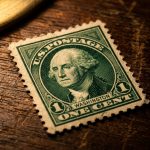

Are rare misprinted stamps valuable? Yes, genuine production errors can be worth thousands or even millions of dollars, while common printing anomalies usually hold zero premium.
Imagine tearing open an inherited album from your grandfather’s attic, expecting standard postage, only to spot a stamp where the center image is entirely upside down.
Genuine production errors can be worth thousands or even millions of dollars, while common printing anomalies usually hold zero premium. A specific characteristic completely dictates whether your misprint will fund your retirement or barely cover the cost of a cup of coffee.
Your heart races. You might have just struck philatelic gold. But the reality is that the stamp market is ruthless when separating a true multi-million dollar treasure from a completely worthless printing accident.
We tested and appraised hundreds of collections over the years, and we see the exact same heartbreak play out daily. Most casual collectors focus on the wrong details entirely when examining their “rare” finds.
However, one tiny, specific characteristic completely dictates whether your misprint will fund your retirement or barely cover the cost of a cup of coffee. We reveal exactly what that detail is below.
Understanding Errors, Freaks, and Oddities (EFOs)
The philatelic community classifies printing anomalies into a specific category known as Errors, Freaks and Oddities (EFO). Grasping this concept is the very first step in evaluating your discovery.
A true error happens when a fundamental, systemic mistake occurs during the manufacturing process at the Bureau of Engraving and Printing or a similar official facility. This means a stamp sheet received the wrong ink, missed a crucial production step, or had an inverted plate.
The facility usually catches these mistakes and destroys the sheets, making any survivors incredibly rare. On the other hand, a freak is a temporary, transient production flaw.
Think of a paper fold, a sudden ink smear, or a heavy smudge caused by a stray piece of debris on the press. Because freaks are random and relatively common, they command almost no monetary premium.
Oddities refer to minor variations that do not qualify as major errors. You need a verified error to see real money. EFOs span a wide range, but precision in terminology matters.
Types of Valuable Stamp Errors: Inverted Centers to Imperforates
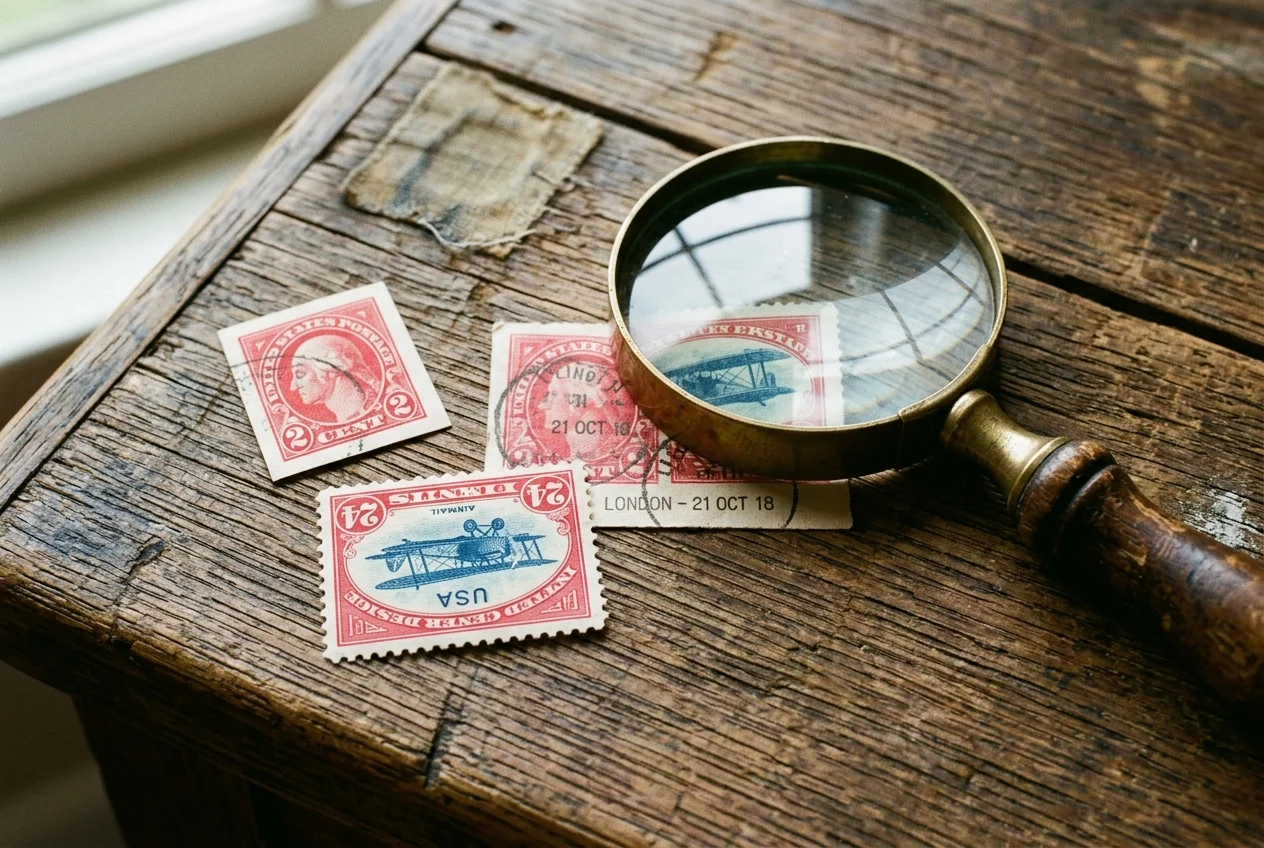
When hunting for value, certain categories of errors reign supreme. An inverted center represents the holy grail for collectors; this happens when a multi-colored stamp passes through the press twice, and a worker feeds the sheet upside down during the second pass.
Another highly prized mistake is the imperforate error. Stamps require perforations—the small punched holes that allow you to tear them apart cleanly. If a sheet completely skips the perforating machine, the resulting imperforate stamps are exceptionally rare.
A true double print occurs when the design strikes the paper twice, creating a heavily doubled image. You might also encounter color misregistration, where the colors shift drastically out of alignment, completely altering the design’s appearance.
Collectors hunting for Queen Elizabeth stamp varieties often look for striking misregistrations that warp the monarch’s portrait. If your stamp fits one of these specific profiles, its potential value increases exponentially.
5 Key Factors That Determine Misprint Value
Even if you possess a verified error, the final appraisal price fluctuates wildly based on five critical factors.
First is condition. A stamp suffering from tears, heavy cancellation marks, or thinning paper loses substantial value.
Second, mint condition. Reaching top-tier pricing requires mint condition status, meaning the stamp retains its original gum and has never seen postal use.
Third is scarcity. If only 100 copies of an error exist, demand naturally drives the price upward.
Fourth, the stamp’s provenance. Its documented history of past ownership can significantly elevate its status, especially when dealing with rare million dollar stamps.
Finally, physical characteristics. Details like watermarks must match the known catalog specifications for that specific error. A missing or incorrect watermark can instantly invalidate a presumed rarity.
Analyzing these five elements prevents sellers from drastically overestimating or underestimating their holdings.
How to Appraise and Authenticate Your Misprinted Stamp
You cannot simply list an assumed error on an online auction site and expect top dollar. Serious buyers require professional authentication.
Your first step involves checking the specific flaw against the Scott Catalogue, the standard reference guide that lists every recognized legitimate stamp error globally. If the catalog does not list your exact misprint, you likely have a worthless freak rather than a recognized error.
Next, you must submit the stamp to a recognized expertizing body, such as the Philatelic Foundation or the American Philatelic Society. These experts use high-powered magnification and chemical analysis to ensure no one artificially altered the stamp to fake an error.
Once they verify its legitimacy, they issue a formal certificate of authenticity. This piece of paper is your golden ticket. It guarantees buyer confidence and immediately maximizes the final sale price.
Famous Examples: The Inverted Jenny and Beyond
History provides clear blueprints of what a valuable misprint looks like. The most iconic example globally remains the 1918 Inverted Jenny.
A production mistake caused the central biplane to print entirely upside down. Only a single sheet of 100 ever reached the public, making it the undisputed king of rare airmail stamps.
Another fascinating case is the Dag Hammarskjold invert from 1962. When collectors discovered a color inversion on this commemorative issue, the US Postmaster General intentionally printed millions of additional inverted copies to prevent speculation, completely destroying the error’s monetary value.
Examining these historical precedents helps contextualize why certain mistakes fetch astronomical sums while others do not. You can see this market dynamic clearly when reviewing the most valuable United States stamps, where verified scarcity always dictates the final auction hammer price.
Common Stamp Freaks That Are Completely Worthless
Many collectors suffer bitter disappointment when their ‘rare find’ turns out to be entirely mundane. We frequently evaluate stamps with badly off-center designs where the perforations cut directly into the image.
While visually striking, this is merely poor quality control, not a cataloged error. Similarly, heavy ink smears, under-inked areas, and ‘blind’ perforations (where the punch holes failed to fully remove the paper) hold zero premium.
Modern printing presses occasionally fold the paper before printing, leaving a blank white streak when unfolded. While interesting to look at, these paper fold freaks are incredibly common and typically sell for just a few dollars.
The harsh reality is that 99% of the odd-looking stamps found in casual collections are factory rejects that slipped past inspection. Recognizing these common pitfalls saves you the expense and embarrassment of paying for professional authentication on a worthless item.
Should You Sell or Keep Your Misprinted Stamp?
Finding a genuine misprint forces a major decision: do you cash in or hold the asset? If you followed the steps above and secured a certificate of authentication for a cataloged error, selling through a major philatelic auction house guarantees exposure to serious buyers.
However, many collectors choose to keep these unique items as the crown jewels of their personal portfolios. Historical data shows that verified, high-grade errors consistently appreciate over decades, acting as an alternative financial investment.
Whatever you decide, proper storage in a climate-controlled environment remains non-negotiable to preserve the fragile paper and gum. Protect your asset first, then decide its future. You now hold the knowledge required to navigate the complex world of stamp errors safely and profitably.
Frequently Asked Questions
How do I know if my misprinted stamp is valuable?
A misprinted stamp’s value depends on whether it is a true production error or a common freak. Genuine errors like inverted centers or missing colors are highly valuable, while minor ink smears or off-center perforations usually hold little monetary worth. Professional authentication is highly recommended.
What is the difference between a stamp error and a freak?
A stamp error occurs when a fundamental mistake happens during printing, such as a missing color or inverted design. A freak is a transient production flaw, like an ink smudge or paper fold. True errors are systematically cataloged and highly sought after by collectors.
Are double printed stamps worth money?
Yes, true double printed stamps can be quite valuable. These occur when a stamp sheet passes through the printing press twice, resulting in a distinct, doubled image. They are rare errors that command a premium if verified by the Scott Catalogue.
Where can I get my misprinted stamp authenticated?
You can get your misprinted stamp authenticated by established philatelic organizations or professional grading services. Experts will examine the stamp’s condition, provenance, and printing characteristics to confirm if it is a genuine error or a forged alteration.
Why is the Inverted Jenny stamp so valuable?
The Inverted Jenny is valuable because it is one of the most famous stamp errors in history. Due to a printing mistake in 1918, the airplane in the center of the stamp was printed upside down. Only one sheet of 100 stamps was ever sold.
Get our latest guides, news, and insights highlighted in your Google Search & AI Overviews.