
A definitive federal duck stamp value guide reveals that while many common issues trade for $10 to $50, rare, early specimens can fetch upwards of $1,000 or more at auction.
If you recently inherited a vintage collection from a relative, or if you actively invest in alternative assets, determining the exact market price of these historical revenues is crucial.
A definitive federal duck stamp value guide reveals that while common issues trade for $10 to $50, rare, early specimens can fetch upwards of $1,000 or more. The exact market price depends heavily on condition, centering, and original gum.
Countless sellers unknowingly part with incredibly valuable assets for pennies on the dollar because they do not fully understand the grading criteria.
However, one specific, highly technical detail that most inheritors completely overlook dictates whether a stamp is worth a few dollars or a small fortune. We analyzed secondary market data for 2026, and the hidden factor separating a standard collectible from a high-end investment is revealed below.
What Is the True Value of a Federal Duck Stamp?
To accurately assess pricing, you must look far beyond the printed face value on the paper. Issued annually since 1934 by the U.S. Fish & Wildlife Service, these revenue items originally cost just one dollar and served as a mandatory license for waterfowl hunters.
Today, the legendary 1934 issue, officially known as RW1, stands out as a highly sought-after foundational piece. A pristine RW1 can easily command thousands of dollars from serious buyers.
For more contemporary issues from the 1980s onward, prices typically hover much closer to their original purchase cost unless specific printing anomalies or perfect grading scores exist.
When conducting standard duck stamp price tracking, always verify actual finalized transactions rather than inflated asking prices. Reviewing recent eBay sold listings gives you a realistic, unfiltered snapshot of current market demand.
Amateur sellers frequently inflate their expectations based on rare, highly graded outliers they see listed online. Relying exclusively on concrete, verified sales data prevents costly miscalculations and ensures you set realistic expectations for your portfolio.
How Grading and Condition Determine Price: Mint vs. Used
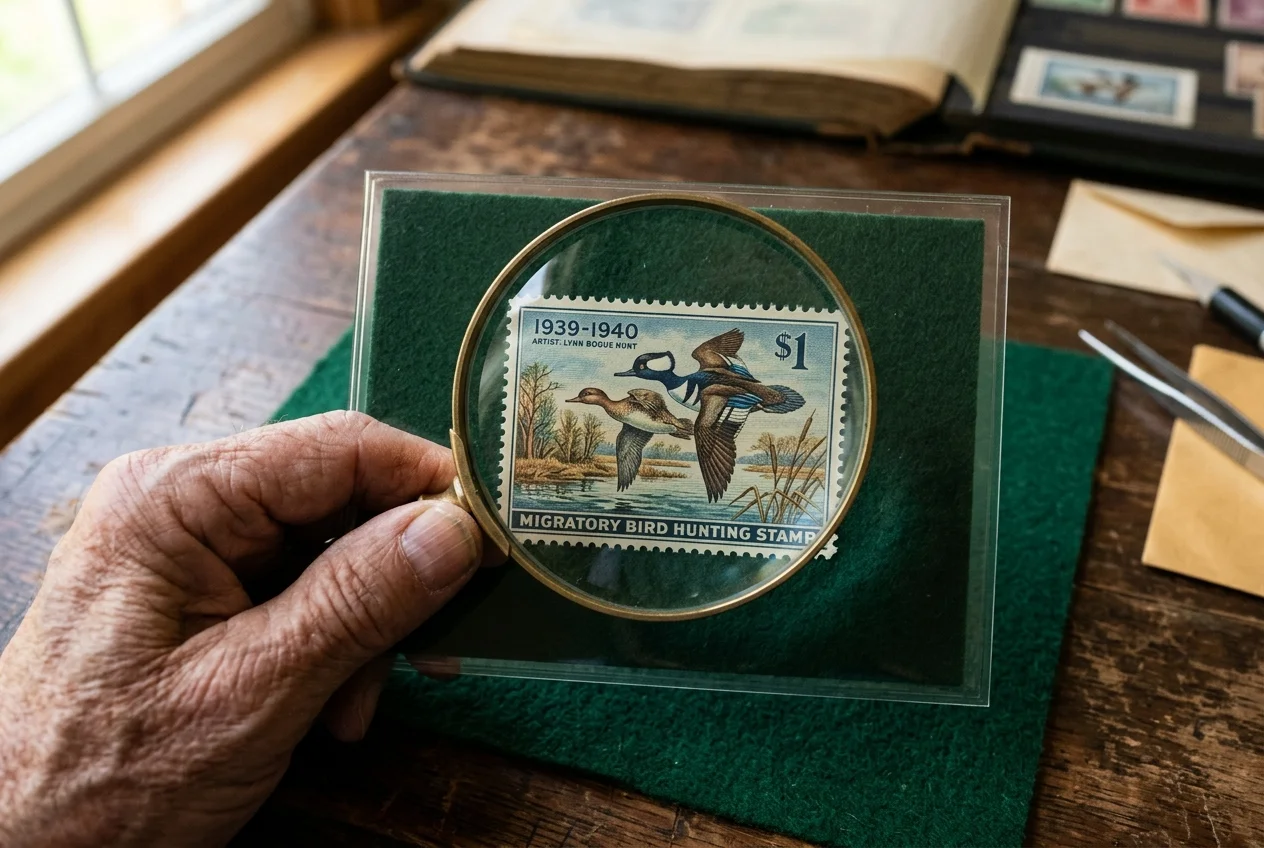
The physical state of your holding entirely dictates its financial worth. In the specialized philatelic market, condition is the ultimate deciding factor.
Mint stamps—those that have never been affixed to a hunting license—naturally hold significantly higher premiums than their used counterparts.
When experts evaluate Mint Condition, they focus heavily on the original adhesive on the back of the paper. A piece classified as Never-Hinged retains its original, undisturbed factory adhesive, maximizing its appeal to purists.
Gum Condition plays a pivotal, often deal-breaking role in this rigorous assessment. Even a microscopic disturbance, a faint fingerprint, or a tiny remnant from an old glassine hinge drops the price substantially.
Additionally, the visual symmetry of the printed design, known as Centering, separates average specimens from elite, museum-quality investments.
A perfectly centered image with wide, balanced margins and flawless, Never-Hinged gum is the holy grail for serious buyers. Conversely, a used stamp suffering from creases, thins, or heavily damaged perforations will see a steep, immediate decline in value, regardless of the year it was issued.
Key Features to Look For: Plate Blocks, Errors, and Signatures
Beyond basic preservation, specific printing characteristics and historical usage dramatically shift valuations. Investors actively hunt for Plate Blocks, which are groups of attached stamps (usually blocks of four) featuring the selvage margin paper printed with the original plate number.
Intact Plate Blocks are significantly rarer than individual singles, require careful preservation, and command a massive premium at auction.
Another major variable involves Signatures. To use the item legally in the field, hunters had to sign their names across the face in ink.
While a Hunter-Signed piece technically counts as used and generally holds far less value than a flawless mint copy, certain historical signatures or unique postal Cancellations can attract specific niche buyers who focus on postal history.
Furthermore, documented printing Errors—such as missing colors, inverted designs on the reverse, or severe misperforations—are incredibly scarce. If you discover a recognized, authenticated error in your album, the market price can skyrocket into the tens of thousands due to extreme scarcity.
| Stamp Feature / Condition | Impact on Market Value |
|---|---|
| Mint, Never-Hinged | Maximum premium; highly sought after by investors. |
| Plate Blocks | Massive premium due to rarity over individual singles. |
| Hunter-Signed | Considered “used”; typically lower value unless the signature is historically significant. |
| Printing Errors | Extreme scarcity; can skyrocket value into tens of thousands. |
Using the Scott Specialized Catalogue and Professional Grading
Navigating the broader collectible stamps market requires access to authoritative, industry-standard reference materials.
Your primary benchmark resource should always be the Scott Specialized Catalogue. This comprehensive publication establishes the baseline catalog values for every issued design and variation.
While the Scott Catalogue provides the essential framework, active market liquidity causes real-world prices to fluctuate constantly. To gauge real-time liquidity and accurate pricing, cross-reference these catalog figures against frequently updated Dealer price lists.
Established dealers adjust their buying and selling rates based on immediate supply, demand, and inventory levels.
For high-value, early issues, securing Professional grading is absolutely non-negotiable. Leading experts at organizations like the American Philatelic Society independently verify authenticity, check for altered gum, and assign a strict numerical grade from 1 to 100.
A professionally graded stamp, particularly one scoring 90 or above, completely removes buyer hesitation, guarantees authenticity, and easily justifies premium asking prices during competitive bidding.
How to Assess and Sell Your Stamp Collection for Maximum Profit
Maximizing your financial return requires a strategic, patient approach rather than a rushed, uninformed sale. Begin the process by organizing your inventory chronologically by year and strictly separating the pristine examples from the heavily used copies.
Protect everything immediately in archival-quality, acid-free mounts to prevent accidental damage to the delicate gum or perforations while handling.
Once your inventory is organized, systematically identify your strongest, most valuable assets. The investment value of early duck stamps remains highly robust, so prioritize grading and authenticating any flawless issues from the 1930s and 1940s first.
When you are ready to liquidate, completely avoid local pawn shops or general antique dealers who lack specialized knowledge. Instead, work exclusively with recognized auction houses or dedicated philatelic dealers who maintain established, high-net-worth client bases.
Presenting a well-documented, professionally graded portfolio guarantees that you attract serious investors who are willing to pay top dollar for verified quality.
The James Hautman Factor: How Recent Contests Affect Secondary Markets
Contemporary events and modern achievements consistently influence historical valuations. The annual federal waterfowl art contest dictates which design graces the upcoming issue, and certain winning artists carry massive prestige within the community.
James Hautman recently secured a historic seventh win for the 2026-2027 season, cementing his legacy as a titan in wildlife conservation art.
This unprecedented, record-breaking achievement has triggered a massive surge of interest in his past winning designs. When an artist reaches such a significant milestone, passionate collectors scramble to acquire their complete back catalog.
We observed a noticeable, immediate uptick in demand for early Hautman issues on the secondary market right after the contest announcement. Holding older designs created by highly decorated, legacy artists often provides a much more stable long-term appreciation curve, making them highly strategic, low-risk additions to your overall portfolio.
Stamps vs. Prints: Clarifying the Most Common Valuation Mistake
New collectors and overwhelmed inheritors frequently confuse the actual adhesive revenues with limited-edition art prints. This simple misunderstanding leads to severely skewed, unrealistic value expectations.
Adhesive Stamps
The actual adhesive is the small, postage-sized item originally purchased from the post office or sporting goods store. It is a federal revenue instrument whose value relies on grading.
Art Prints
Winning artists sell much larger, signed lithographs or art prints directly to the public. While valuable, these are pieces of decorative fine art operating in an entirely independent market.
Always separate these two distinct categories when appraising your collection to ensure your valuation remains highly accurate, realistic, and aligned with market realities.
Final Thoughts on Duck Stamp Investing
Building and accurately evaluating a premium collection demands patience, precision, and access to the right data. By focusing entirely on exceptional condition, utilizing rigorous professional grading, and closely monitoring authoritative catalogs, you position yourself for maximum financial success.
The secondary market consistently rewards those who deeply understand the technical nuances of centering, strict gum preservation, and historical significance.
Review your current holdings carefully, aggressively authenticate your best pieces, and enter the market with absolute confidence. For quick, actionable answers to the most common valuation questions, review our frequently asked questions section below.
Frequently Asked Questions
How do I find out the exact federal duck stamp value for my collection?
To determine your federal duck stamp value, examine the gum condition, centering, and whether it is never-hinged. Compare these specific factors against the Scott Specialized Catalogue or consult professional grading services to establish an accurate, current market price. Cross-referencing against actual standard duck stamp price tracking data ensures accuracy.
What makes a federal duck stamp valuable?
Extreme rarity, pristine mint condition, and unique features like attached plate blocks, historical hunter signatures, or documented printing errors significantly increase value. Early issues like the 1934 RW1 are especially prized and aggressively sought after within the broader collectible stamps market.
Should I get my duck stamps professionally graded?
Yes, professional grading by established organizations like the American Philatelic Society independently verifies authenticity and condition. Graded stamps, particularly those scoring a 90 or above, remove buyer doubt and frequently command significantly higher prices from serious collectors and investors at auction.
Are signed duck stamps worth more?
It heavily depends on the context. A hunter-signed stamp was required for legal hunting use, making it technically “used.” While pristine, unsigned mint stamps are generally far more valuable, historically significant signatures or distinct cancellations can sometimes add unique appeal and value for niche postal history collectors.
What is the difference between a duck stamp and a duck stamp print?
A duck stamp is the actual adhesive revenue issued by the U.S. Fish & Wildlife Service, while a print is a larger artwork reproduction sold by the artist. Value guides completely separate these items, as mint stamps and limited-edition prints have very distinct secondary markets and buyer demographics. Understanding the investment value of early duck stamps requires keeping these two categories completely isolated.
Error: Contact form not found.
Get our latest guides, news, and insights highlighted in your Google Search & AI Overviews.