The most valuable united states stamps feature extreme rarity, printing errors, or unique historical characteristics. These specific traits drive immense collector demand globally.
The most valuable united states stamps feature extreme rarity, printing errors, or unique historical characteristics. In June 2024, the William H. Gross collection auction shattered all previous market expectations when a single piece of paper changed hands for a record-breaking $4.366 million.
In June 2024, the William H. Gross collection auction shattered all previous market expectations. A single piece of paper changed hands for a record-breaking $4.366 million.
This historic auction record proved the enduring financial power of rare philately. You might have just inherited a dusty stamp album from a distant relative.
You flip the brittle pages and see dozens of antique faces looking back at you. Could one of those tiny, colorful squares hold a life-changing fortune? The answer depends entirely on a microscopic detail most people miss completely…
What Are the Most Valuable United States Stamps?
Age alone does not equal value in the complex philatelic world. The post office printed millions of early George Washington and Abraham Lincoln stamps.
Most of these common 19th-century issues remain worth only a few pennies today. True wealth hides exclusively in extreme scarcity and pristine physical condition.
- Collectors relentlessly hunt for uncancelled examples retaining their original gum.
- The original adhesive on the back proves the stamp survived perfectly preserved.
- Sometimes, immense value hides within seemingly ordinary, everyday designs.
For example, certain valuable 2-cent red oval stamps feature incredibly rare watermark variations. You cannot see these watermarks without using specialized fluid.
Other astute collectors uncover massive wealth hidden inside specific, limited printings of valuable 3-cent liberty stamps. You must know exactly what physical characteristics to look for. This knowledge prevents you from undervaluing a true rarity.
The 1868 1-Cent Benjamin Franklin Z Grill and Other Record Breakers
The 1868 1-cent Benjamin Franklin holds the ultimate crown in American philately. This specific stamp features the legendary Z grill.
The post office pressed this waffle-like grill pattern into the paper to absorb cancellation ink. They desperately wanted to stop fraudsters from washing and reusing postage.
The Z grill experiment lasted only a brief period before officials abandoned it. Today, this short-lived security measure creates unprecedented financial value.
Only two verified copies of the 1-cent Z grill exist today. The New York Public Library owns one copy permanently. The other copy circulates privately, fueling relentless market demand among billionaires.
The June 2024 auction proved that top-tier collectors will pay anything for unique historical artifacts. Other grill types exist, but the Z pattern remains the holy grail. Identifying this specific grill requires expert-level authentication.
The 1918 24-Cent Inverted Jenny: An Iconic Error
Printing errors consistently command the highest prices at any major auction. The 1918 24-cent Inverted Jenny stands as the most famous error in American history.
The striking design shows the Curtiss JN-4 biplane printed entirely upside down. The postal service accidentally sold exactly one sheet of 100 errors.
A sharp-eyed collector named William T. Robey bought that single sheet at a post office window. He immediately realized the massive magnitude of this printing mistake.
Today, buyers heavily scrutinize centering when evaluating these surviving copies. The printed image must sit perfectly balanced within the perforated borders. A perfectly centered Inverted Jenny commands a massive financial premium over off-center examples.
Investors track each of the original 100 stamps meticulously. Their individual physical condition dictates their exact current market value. Some copies suffered damage over the decades, lowering their final auction price.
How to Check Your Stamps for Centering, Perforations, and Z Grills
Before you quit your day job, you must check if your stamps are valuable using precise metrics.
Step 1: Check Perforations
Start by measuring the perforations along the paper edges. These punched holes differ slightly between various printing runs. Use a specialized metal perforation gauge to find the exact count.
Step 2: Inspect for Hinge Marks
Next, inspect the back of the stamp for any hinge marks. Previous generations of collectors used small adhesive hinges to mount stamps in albums.
These outdated hinges damage the delicate paper fibers upon removal. Flawless, unhinged backs hold significantly more value in today’s market.
Collectors demand pristine condition when investing serious capital into philately. Finally, examine any cancel marks under high magnification.
Uncancelled stamps usually rule the market. However, a rare, clearly struck historical cancellation can actually increase desirability on specific 19th-century issues.
How to Find the Scott Catalog Value and Get a Philatelic Appraisal
You cannot trust random online forums for accurate stamp pricing data. You must reference the Scott Specialized Catalogue to find the baseline Scott catalog value.
This massive reference guide provides industry-standard pricing and identification numbers for every variation. You must carefully match your stamp’s specific perforations, colors, and watermarks to the catalog.
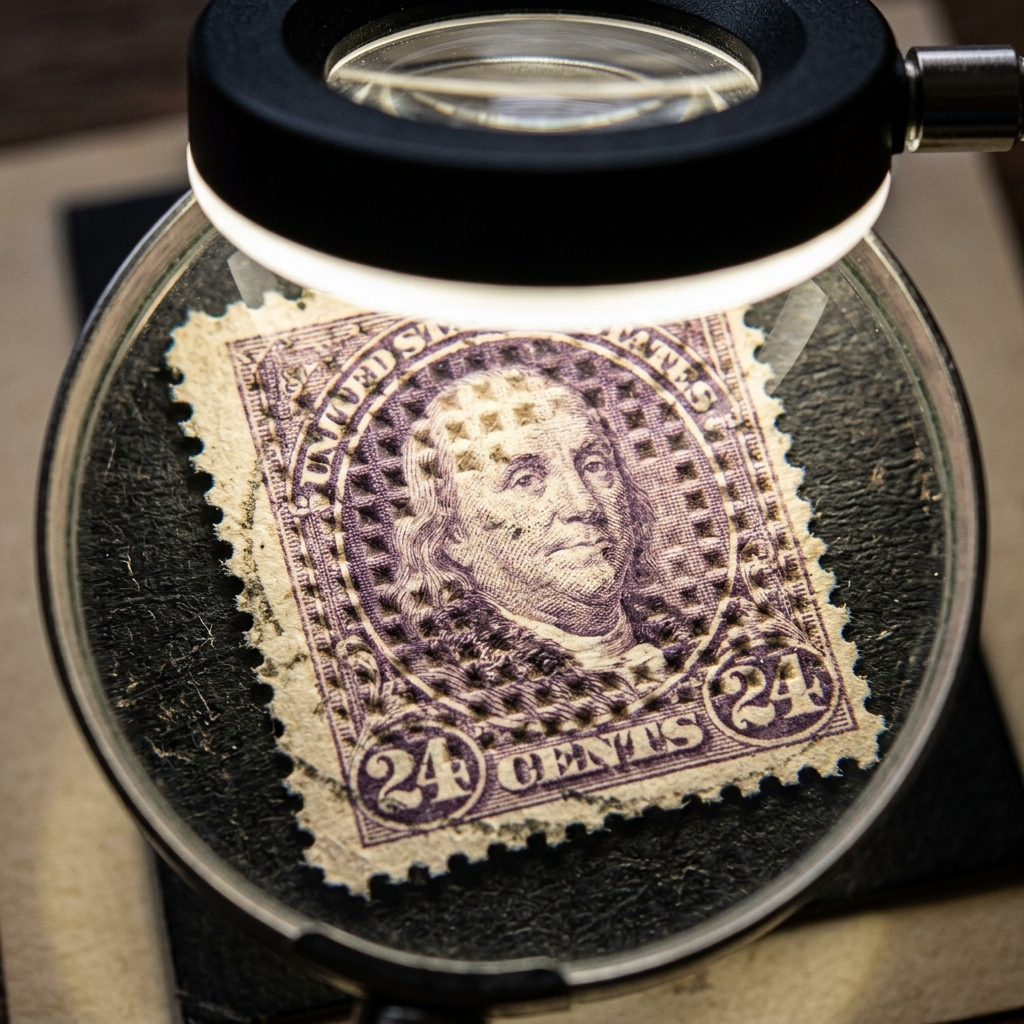
- This meticulous process requires immense patience, strong lighting, and a good magnifying glass.
- Small details drastically change the final catalog number.
- If your stamp matches a rare catalog entry, seek a professional philatelic appraisal immediately.
Certified experts possess the advanced tools and knowledge to verify the exact variety. They will confirm whether you hold a genuine rarity or a common replica.
Never attempt to sell a potentially rare stamp without this expert guidance. A professional appraisal protects you from predatory buyers. It also gives you leverage when negotiating a final sale price.
eBay vs. Reality: Debunking Stamp Market Myths
Novice sellers on eBay frequently list common stamps for thousands of dollars. These absurd listings reflect pure wishful thinking and lack any connection to actual sales.
You must look exclusively at completed sold listings to understand the real market. For instance, beginners often overvalue golden replicas of United States stamps.
Private mints produced these shiny novelties purely as mass-market decorative collectibles. They hold almost zero real resale value in the serious philatelic market.
Serious buyers require a formal authentication certificate before spending significant money. The Philatelic Foundation issues these prestigious certificates after rigorous scientific examination of the paper and ink.
They definitively prove the stamp’s exact origin and current physical condition. Without this documented proof, you cannot convince a knowledgeable buyer to part with their cash.
Forgeries heavily plague the high-end vintage stamp market. A recognized certificate acts as your absolute guarantee of authenticity.
Where to Sell Your Most Valuable United States Stamps Safely
You successfully identified a rare stamp and secured a certificate of authenticity. Now you must find the exact right buyer to maximize your financial return.
You should actively avoid local pawn shops or general antique dealers. These generalists completely lack the specialized knowledge to price rare stamps accurately.
Instead, contact top-tier auction houses like the Robert A. Siegel Auction Galleries. These prestigious firms specialize exclusively in high-end American philately.
- They attract serious global collectors who possess the capital to pay top dollar.
- The auction house handles the global marketing, professional photography, and active bidding process.
- They take a percentage commission directly from the final sale price.
This highly competitive auction environment ensures you receive the absolute maximum market value. Wealthy buyers will bid aggressively against each other for a verified rarity. This strategy yields far better results than a private, unadvertised sale.
Final Thoughts on US Stamp Investing
Stamp collecting offers a fascinating blend of American history, fine art, and high-stakes investing. The market aggressively rewards deep knowledge, endless patience, and meticulous attention to detail.
You must look well beyond the basic surface image to find true financial value. Start measuring those perforations, checking for hidden watermarks, and intensely studying the specialized catalogs.
Educate yourself completely on the subtle, microscopic differences between historical printings. You never know what rare variations might be hiding in that dusty attic album.
Want to see if your collection holds hidden rarities? Check out our complete guide on identifying valuable stamps now!
Frequently Asked Questions
What is the rarest and most valuable US stamp?
The 1868 1-cent Benjamin Franklin Z Grill is considered the rarest and most valuable US stamp. In June 2024, a prime example from the William H. Gross collection broke auction records by selling for $4.366 million, highlighting immense market demand.
How can I tell if my old stamps are worth money?
You can check if your stamps are valuable by examining physical attributes like the presence of original gum, crisp perforations, and perfect centering. Comparing these traits against the Scott catalog value helps determine potential worth before seeking out professional buyers.
Do cancel marks decrease the value of a stamp?
Usually, unused stamps with original gum and no hinge marks are most valuable. However, some early stamps are actually more desirable with specific, historically significant cancel marks. A proper philatelic appraisal can confirm whether a cancel mark adds or subtracts real value.
What makes the Inverted Jenny stamp so expensive?
The 1918 24-cent Inverted Jenny features an iconic printing error where the Curtiss JN-4 biplane was printed upside down. Only one sheet of 100 was ever sold, making it a legendary rarity that frequently sets auction records for United States postage.
How do I get an authentication certificate for my stamps?
To guarantee your stamp’s authenticity and maximize its market demand, you should submit it to recognized experts like the Philatelic Foundation. An authentication certificate is absolutely essential for high-end sales through top-tier auction houses like the Robert A. Siegel Auction Galleries.
Get our latest guides, news, and insights highlighted in your Google Search & AI Overviews.