
Becoming a true philatelist for stamp collectors means moving beyond simply hoarding colorful paper and stepping into the serious study of postal history.
You likely started your journey by saving interesting stamps from letters or filling basic albums. We all begin there.
However, you soon realize that casual collecting only scratches the surface. You see experts talking about microscopic details and dizzying auction prices.
You might feel overwhelmed by their academic jargon and strict rules. We understand that frustration completely.
We have guided countless beginners through this exact transition. The shift requires learning a new language and adopting professional habits.
But there is one specific detail most new collectors completely miss that decides whether a stamp is worth $5 or $5,000. We reveal exactly what that detail is below.
What is a Philatelist? Stamp Collector vs. Philatelist Explained
A stamp collector joyfully gathers and organizes postage stamps for personal enjoyment.
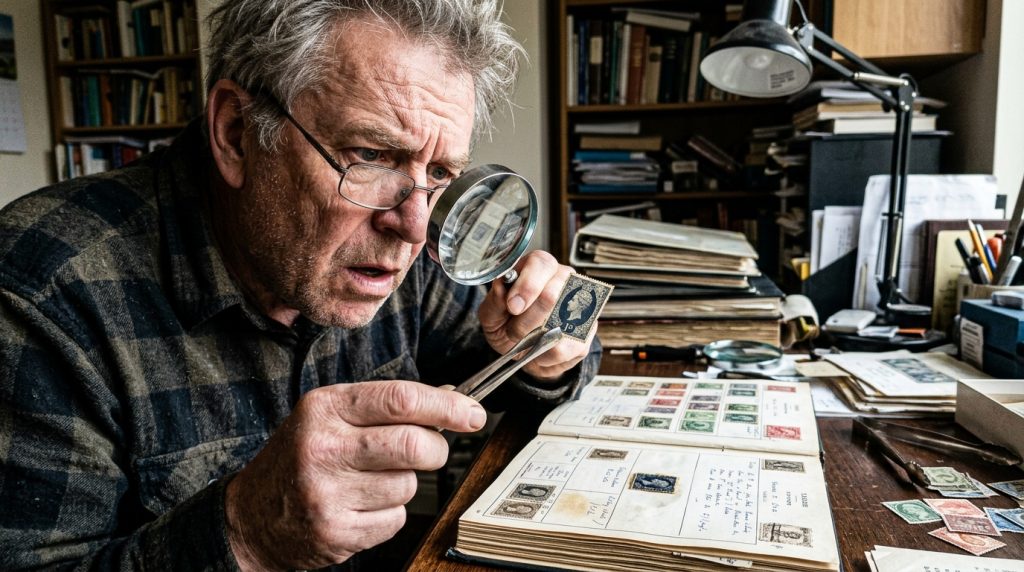
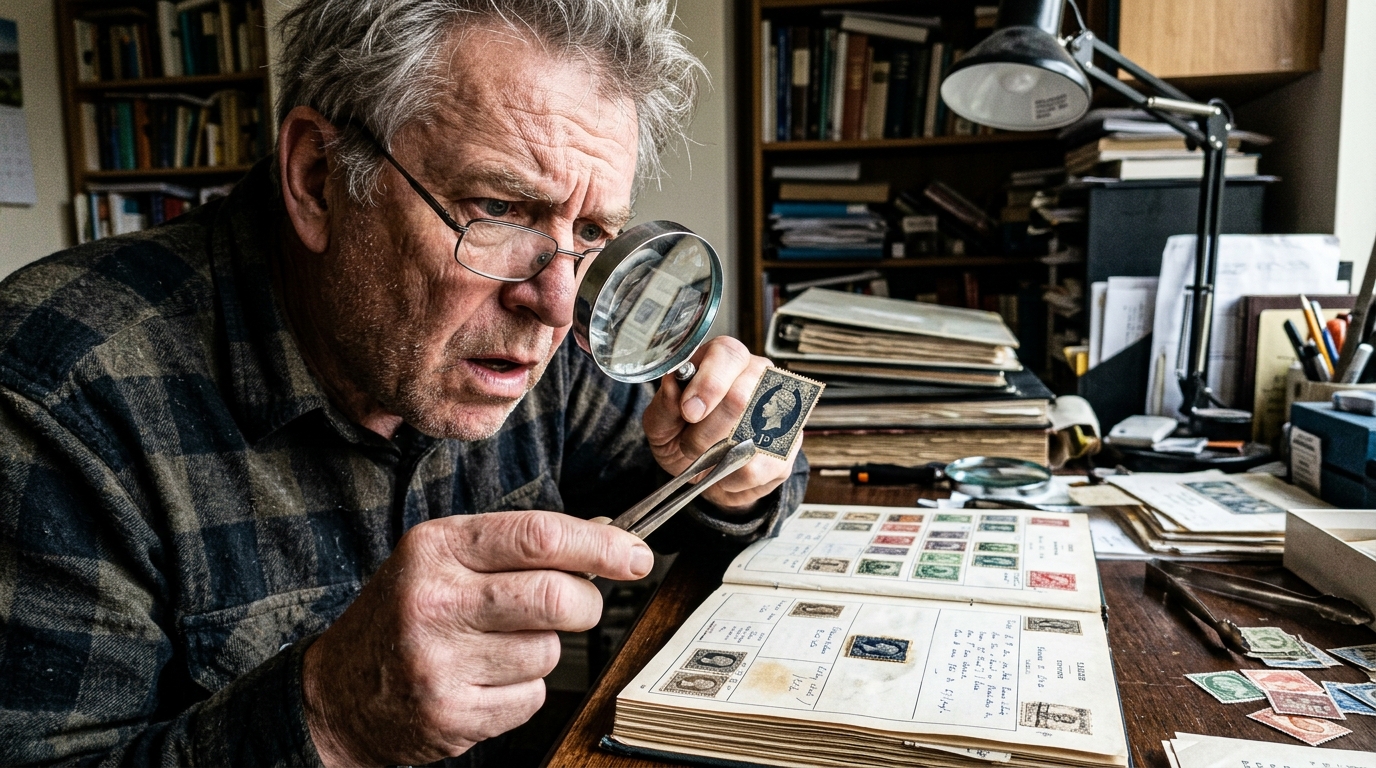
A philatelist takes a much deeper, analytical approach. Philately (the study of stamps and postal history) requires serious research and historical context.
The French collector Georges Herpin actually coined this term in 1864. He combined Greek words meaning the love of tax-free items.
We see collectors focus purely on visual appeal and completing sets. Philatelists, however, investigate the story behind every single issue.
They study paper types, ink compositions, and precise printing methods. They analyze the exact routing a letter took across the globe.
Some even specialize entirely in revenue stamps (stamps used to collect taxes rather than postage). We believe this transition is thrilling rather than intimidating.
You stop seeing a simple piece of paper and unlock a tiny window into human history.
Essential Tools: From Stamp Tongs to Glassine Envelopes
Every professional craft requires the right equipment. You must upgrade your toolkit to protect your investments immediately.
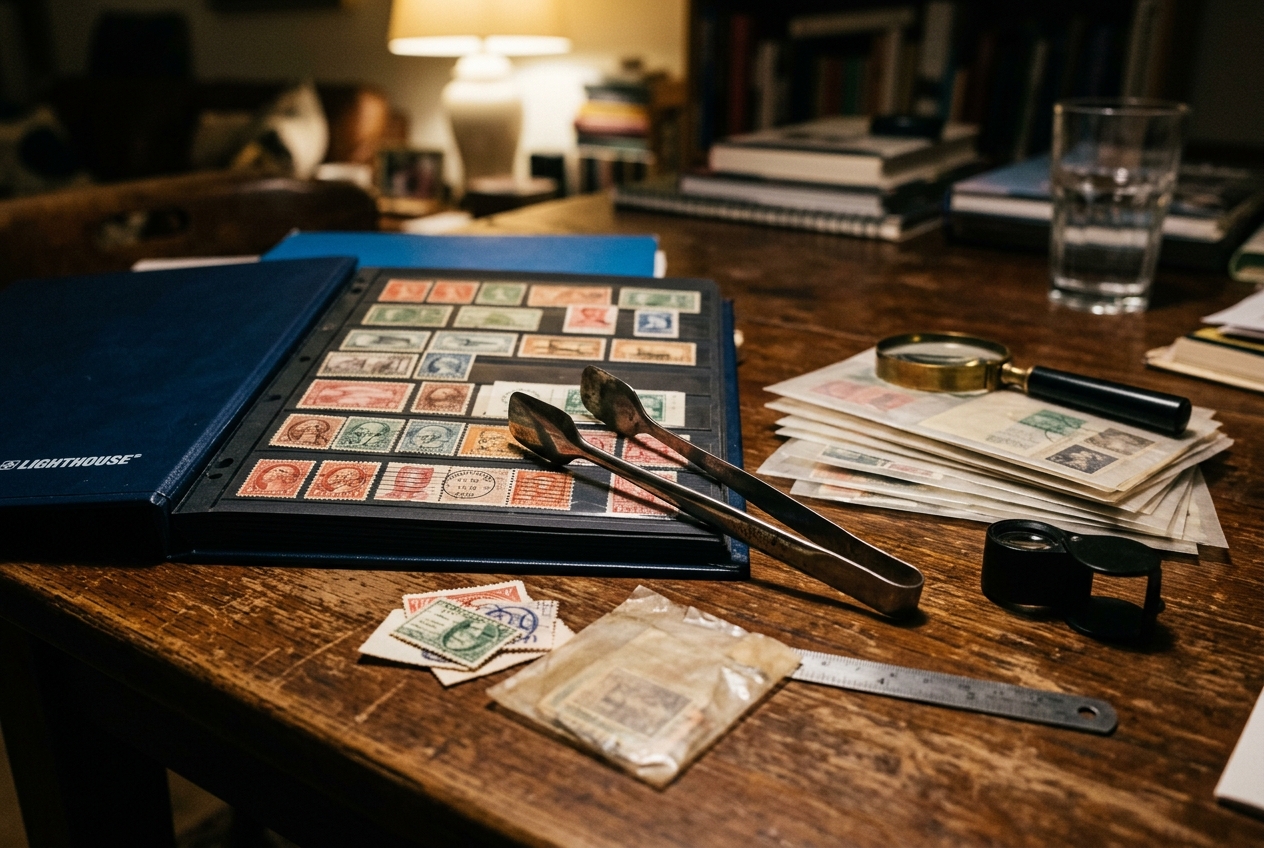
First, you need professional stamp tongs (tweezers with smooth, rounded tips). You must never touch valuable pieces with your bare hands.
Natural skin oils will permanently damage the delicate paper and ruin the original adhesive.
Next, you need a high-quality magnifying glass (a lens used to view small details). We recommend at least 10x magnification to spot hidden varieties.
You will use this to examine printing errors and paper textures closely.
For storage, you must discard cheap, acidic materials. You should store your loose items safely inside glassine envelopes (transparent, acid-free paper pouches).
For display, upgrade to archival-quality stockbooks (albums with clear strips to hold stamps safely).
Before placing anything in your new stockbooks, you might need help measuring stamp sizes to ensure a perfect fit.
Condition & Grading: Canceled vs. Mint Condition Stamps
Condition dictates everything in this market. The detail we teased earlier that drives prices wildly is flawless condition.
You must learn how experts grade these tiny treasures. A stamp in mint condition (flawless, unused state) commands premium prices.
The absolute peak grade is Mint Never Hinged (MNH). This means the original gum (the adhesive on the back) remains perfect and untouched.
Conversely, a canceled item has gone through the mail system. The post office applies a cancellation (ink mark preventing reuse) over the design.
Interestingly, a rare postmark (the specific dated postal cancellation) can sometimes make a used item more valuable than a mint one.
You must also examine the centering (how evenly the design sits within the borders). Perfect centering drastically increases desirability.
Finally, you need to check the exact Perforations (the punched holes separating stamps) and hunt for hidden Watermarks (faint designs pressed into the paper).
These subtle features are crucial when valuing old used stamps accurately.
Serious collectors always hunt for rare Postmarks to complete their historical narratives.
Step-by-Step: Transitioning from Stamp Collecting to Philately
We know the leap to serious study feels massive. You can navigate it easily by following a few structured steps.
First, pick a narrow specialty to avoid feeling overwhelmed. You might focus on a single country, a specific historical era, or even just first day cover stamps.
Second, you must invest in standard reference catalogs. These thick books provide exact identification numbers and baseline values for every issue.
Third, we strongly advise you to join established organizations. You should become a member of the American Philatelic Society.
They offer incredible resources, expert authentication services, and beginner courses. If you live across the Atlantic, look into the Federation of European Philatelic Associations.
Connecting with experienced mentors accelerates your learning exponentially.
Finally, attend local club meetings and regional shows to handle actual material.
Navigating Modern Philately in 2026
The hobby continues to evolve rapidly as we move deeper into 2026. Digital tools now assist with watermark detection and precise perforation measurement.
However, the thrill of physical discovery remains completely unchanged. You must stay updated on major upcoming releases and global events.
For example, the highly anticipated US 250th Anniversary ‘Declaration of Independence’ Forever Stamp presents a brilliant opportunity.
Modern releases like this often feature unique printing techniques or hidden security elements. You should study these modern security features to sharpen your analytical skills.
We also highly recommend attending major international gatherings if possible. The massive Macao 2026 World Stamp Exhibition will showcase some of the rarest collections on the planet.
Walking the dealer floors at such events provides an unmatched education. You can inspect legendary rarities up close and network with world-class experts.
Common Myths About Philately Debunked
Many beginners harbor false assumptions that stall their progress. We hear the same recurring myths constantly.
The most dangerous myth suggests that extreme age equals high value. This is simply false.
Billions of common 19th-century issues exist today, and they hold very little monetary value. Rarity and condition always trump sheer age.
Another myth claims that serious study is a lonely, purely academic pursuit. In reality, the community is incredibly vibrant and social.
We constantly see passionate debates at exhibitions and lively discussions in online forums.
Finally, many believe you need immense wealth to participate. While top-tier rarities cost millions, you can build a world-class specialized collection on a modest budget.
You just need superior knowledge and extreme patience to spot undervalued gems.
Ready to Elevate Your Stamp Collecting Journey?
You now understand what separates a casual hobbyist from a dedicated scholar. You know which essential tools to purchase immediately.
You understand how critical pristine condition and tiny physical details truly are. You also know exactly where to find community support and ongoing education.
We encourage you to grab your magnifying glass and inspect your current albums with fresh eyes. You might already own something fascinating that you previously overlooked.
Dive into the questions below to clarify any remaining doubts.
Frequently Asked Questions
What is the main difference between a stamp collector and a philatelist?
While a stamp collector simply accumulates and organizes stamps for fun, a philatelist deeply studies postal history, paper types, watermarks, and postmarks. Philately is the academic and historical study of stamps, requiring specialized tools and knowledge beyond casual collecting.
What tools does a beginner philatelist need?
A beginner philatelist must have stamp tongs to prevent oil damage, a high-quality magnifying glass to inspect perforations, stockbooks for safe storage, and glassine envelopes. Using your hands or standard albums can permanently damage rare mint condition stamps.
Are first day covers valuable to a philatelist?
First day covers can be very valuable, especially if they feature rare cancellations or historical significance. A true philatelist examines the postmark origin, the envelope’s condition, and the historical context to determine the item’s overall market value and rarity.
What does Mint Never Hinged (MNH) mean?
Mint Never Hinged (MNH) is a grading term meaning the stamp is in perfect, original condition. It has never been attached to an album page with a stamp hinge, preserving its original gum and maximizing its value for serious philatelists.
Why do philatelists care about perforations and watermarks?
Perforations and watermarks help identify a stamp’s exact printing run and authenticity. Two visually identical stamps can have different values if one has a rare watermark or specific perforation gauge, making these details essential for accurate philatelic identification.
Get our latest guides, news, and insights highlighted in your Google Search & AI Overviews.