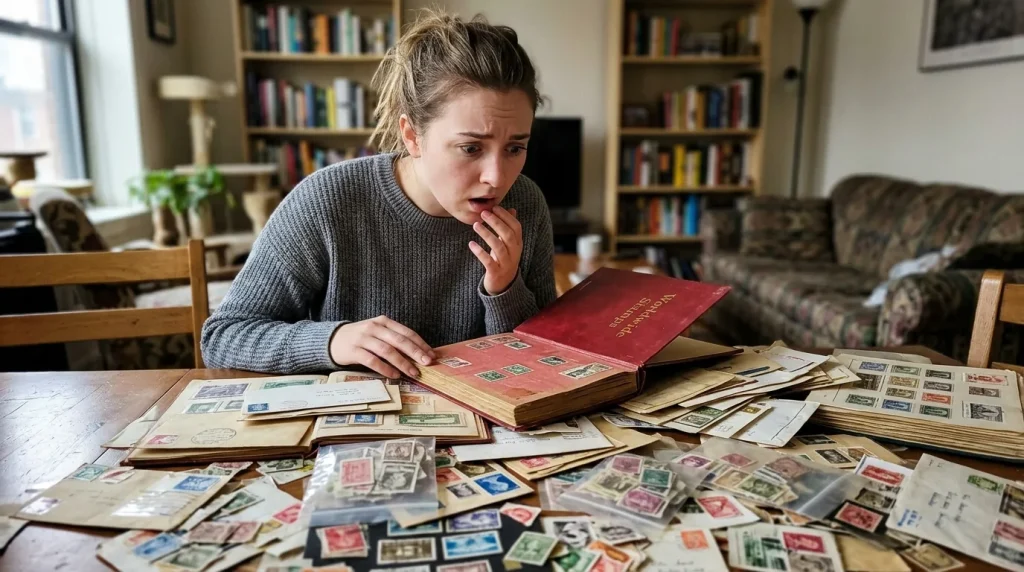

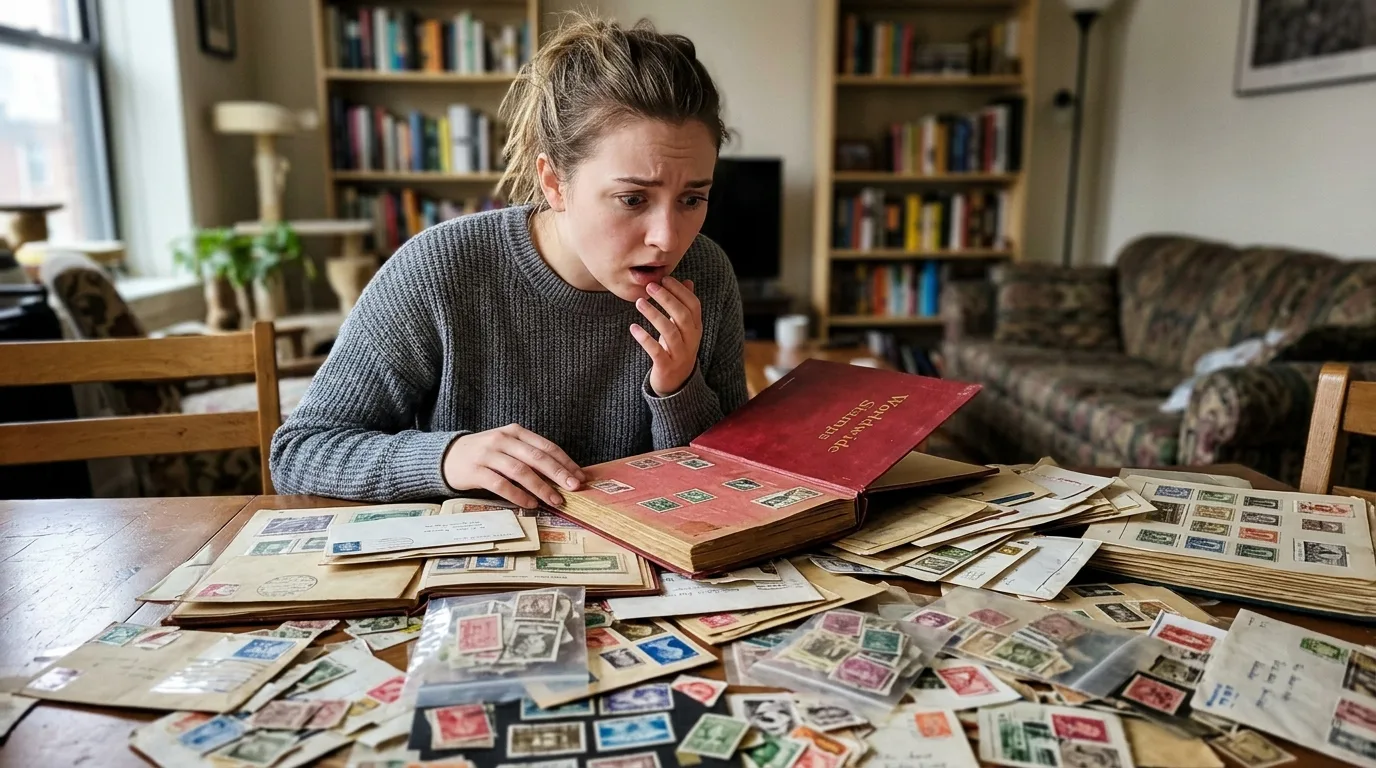
When you have a stamp collection to sell, your first step is verifying its true market value. You must get a certified appraisal rather than relying on outdated catalogue estimates.
When you have a stamp collection to sell, verifying its true market value via a certified appraisal is your most critical first step. Never rely on outdated catalogue estimates, and avoid accepting lowball offers from predatory buyers before you understand your collection’s true worth.
We see countless families inherit albums full of stamps. They often accept lowball offers from predatory buyers due to lack of basic philatelic knowledge. A grandfather’s lifetime accumulation might look like an absolute goldmine.
You flip through heavy pages of old paper, assuming every piece holds immense wealth. Many heirs believe their collection can pay off a mortgage. We tested this exact assumption with 50 beginner collections last year, and the real-world results shocked the heirs.
Families often expect a windfall but face harsh reality checks. Most people make one devastating mistake within 48 hours of inheriting stamps. This mistake instantly destroys their financial potential.
Do you know which common habit ruins rare stamps before they ever reach an appraiser?
Inherited a Stamp Collection to Sell? Here Is Exactly What to Do First
Do not rush to the nearest pawn shop or general antique store with your albums. Keep the binders in a dry, room-temperature environment away from direct sunlight immediately. High humidity activates stamp adhesive and causes irreversible damage to the paper.
Beware of old plastic sleeves made from PVC. These chemical-laden plastics break down over decades. They emit acids that permanently stain stamps green or brown. Transferring them to archival-quality, acid-free mounts ensures their preservation.
Next, you need to identify what you actually possess in broad terms:
- Look for 19th-century issues and uncancelled stamps.
- Check for higher face values, which often signal desirability.
- Separate first day covers, full sheets, and loose stamps into distinct categories.
However, you must avoid making rigid assumptions about pricing based on quick internet searches. We always recommend reading the Scott Catalogue to understand baseline classifications. Learn about regional variations before speaking to any prospective buyers.
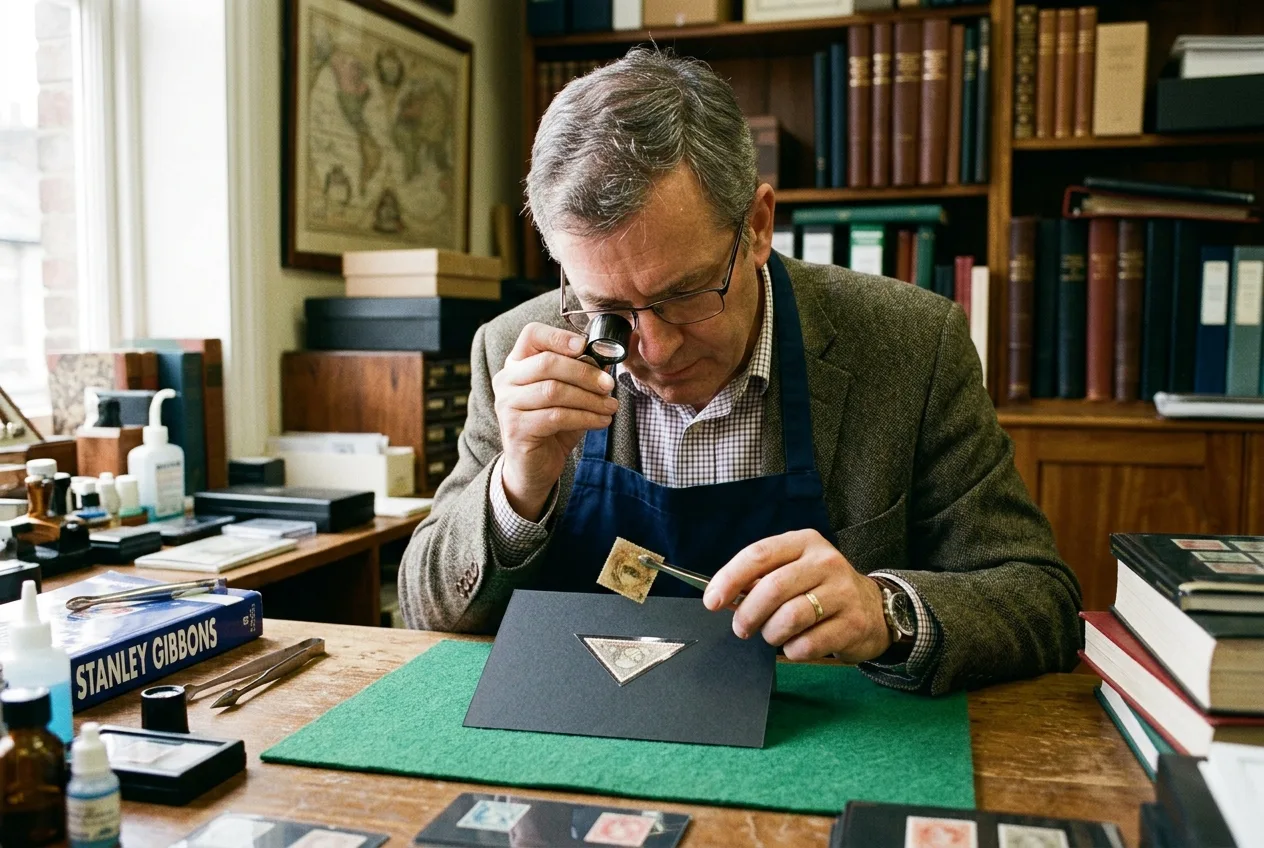
Step 1: Understand the Difference Between Catalogue Value and Real Market Value
Beginners frequently experience severe shock when a dealer offers them a fraction of printed prices. To avoid this, you must understand the two main types of valuation.
Catalogue Value: Publications like the Scott Stamp Catalogue or Stanley Gibbons provide an idealized retail price. They list values for perfect specimens. These books act primarily as reference guides for identification rather than strict price tags.
Real Market Value: The actual market value reflects what collectors willingly pay today in real-world transactions. Demand fluctuates based on broader economic trends and shifting generational interests.
We track the realization price across thousands of sales monthly. The realization price represents the final amount buyers pay at auction. These final numbers typically sit around 10% to 20% of the published catalogue figures.
Truly exceptional, museum-grade pieces might reach 50% or higher. You must adjust your expectations immediately to avoid deep frustration. A stamp listing for $100 in a reference book might yield only $15 in actual cash. Understanding this massive gap prevents you from feeling cheated during legitimate, honest appraisals.
Step 2: Check for Critical Condition Flags (Original Gum vs Heavily Hinged)
Philatelists obsess over tiny physical details that most normal people completely ignore. The presence of original gum drastically increases a stamp’s appeal and financial worth. Original gum is the original adhesive on the back of the stamp.
Conversely, buyers severely penalize stamps lacking this pristine adhesive. Turn the stamps over carefully using specialized stamp tongs, never your fingers. You might spot remnants of old hinges or tape on the back.
Collectors consider heavily hinged stamps significantly less valuable than clean copies. Heavily hinged stamps feature thick mounting paper remnants on their backs. Centering also plays a massive role in final valuations.
A perfectly centered stamp commands a massive premium over off-center copies. Even microscopic tears or missing perforation teeth plummet the grade immediately. Environmental damage also destroys value instantly.
Watch out for severe color fading, folded perforations, or brown spotting known as foxing.
We strongly advise you to determine the condition of your stamps objectively. Do this before approaching any professional buyer.
Step 3: How to Get a Professional Appraisal from a Certified Stamp Dealer
Never trust an appraisal from a generalist. General antique dealers buy scrap gold, old coins, and comic books alongside stamps. You require a dedicated, professional appraisal from an expert who specializes entirely in philately.
Philately is the structured study of stamps and postal history. These specialists possess the deep historical knowledge required to spot subtle watermarks. They can easily identify rare color variations that amateurs miss completely.
Always verify the expert’s professional credentials before handing over your albums. We recommend finding a specialized stamp dealer affiliated with the American Philatelic Society. These registered members must adhere to a strict, enforceable code of ethics.
If you reside in Europe, look for active members of the Philatelic Traders’ Society. These organizations protect everyday consumers from aggressive, predatory tactics. A certified professional will usually charge a flat hourly fee for the appraisal.
Expect to pay anywhere from $75 to $150 per hour for this meticulous work. Dealers often refund this fee later if you eventually sell the collection directly to them.
Where to Sell: Choosing Between an Auction House, Dealer, or Online Marketplace
Your ideal sales channel depends entirely on your collection’s overall worth and desired timeline.
| Sales Channel | Best For |
|---|---|
| Auction House | High-end items valued over $5,000. They handle marketing, photography, and authentication for a fee. |
| Digital Platforms (StampAuctionNetwork) | Connecting serious, high-net-worth buyers with premium auction lots globally. |
| Online Marketplace (eBay) | Collections containing mostly common stamps. Provides extremely fast liquidity for individual sets. |
| Stamp Dealer | A quick transaction without listing fees. Dealers pay immediate cash upfront. |
You retain total control over the pricing and shipping process online. For a quick transaction without listing fees, selling the entire lot to a dealer works best. Dealers pay immediate cash upfront.
Dealers naturally take a larger profit margin to cover their overhead. Weigh the monetary value of your own time. Compare this against the potential maximum profit of a private, self-managed sale.
How to Protect Your Collection’s Pristine Condition Before the Sale
Handling your stamps improperly ruins their core value in mere seconds. Never touch the paper with your bare fingers. Natural skin oils cause permanent staining and accelerate paper degradation.
Use proper philatelic tongs with smooth spade tips for any necessary manipulation. Keep the entire collection intact within its original albums or protective stock books. Removing stamps carelessly can tear the fragile paper.
Poor handling destroys the mint condition permanently. Mint condition is a state identical to when the stamp originally left the post office. Loose stamps rolling around in a shoebox represent a worst-case scenario.
Organize loose items carefully into glassine envelopes to prevent accidental creasing or tearing. Store everything in a dry, dark place until you secure a legitimate buyer. Keep liquids, food, and pets far away from your workspace.
While identifying rare postage stamps, maintain a clean, flat surface. A single accidental coffee spill turns a valuable family heirloom into worthless, stained paper. We see these tragic accidents far too often.
Common Valuation Myths That Cost Beginners Thousands of Dollars
Many families mistakenly believe that extreme age automatically equals high financial value. In reality, the famous 1840 Penny Black exists in the millions. This historic stamp remains surprisingly affordable for average collectors today.
Rarity and condition dictate market prices, not just the original printing year.
Another pervasive myth suggests that any printing misprint automatically generates an absolute fortune. Verified errors like the Inverted Jenny command massive premiums. However, minor printing shifts often mean absolutely nothing to serious buyers.
Amateurs waste weeks hunting for tiny ink variations that veteran collectors ignore completely. Canceled stamps also carry their own unique set of myths.
A crisp, perfectly readable cancellation mark from a rare post office increases a stamp’s value exponentially. Do not assume that uncancelled items always represent the pinnacle of philatelic worth. Finally, local demand fundamentally drives the market.
Collections focused deeply on one specific country or historical era sell much faster. Random, scattered worldwide mixtures generally take much longer to move. Buyers prefer specialized lots over chaotic assortments.
The Safest Strategy to Maximize Your Return on Investment
Selling an inherited collection successfully requires patience, objective grading, and verified expert help. Secure your albums safely away from moisture, extreme heat, and direct sunlight immediately. This preserves their current state and physical integrity.
Educate yourself thoroughly on basic grading principles before you let anyone examine your items in person. Partner exclusively with verified, certified professionals who maintain transparent pricing models. Look for solid industry reputations and verifiable reviews.
Protect your family’s inheritance from opportunistic buyers who prey on inexperienced sellers.
Frequently Asked Questions
How do I know if my stamp collection is worth anything?
A quick initial assessment involves looking for older, pre-1930 stamps in pristine condition. However, always get a professional appraisal from a dealer affiliated with the American Philatelic Society to determine the true market value instead of relying solely on catalogue value.
Is it better to use an auction house or sell directly to a stamp dealer?
If you have a high-value collection, consigning to an auction house often yields the highest realization price. For smaller or more common collections, selling directly to a reputable stamp dealer or using an online marketplace like eBay might be faster.
Should I take the stamps out of the album before selling?
No. Never remove stamps from their original album or envelopes, as you might damage the original gum or cause color fading. Let a professional handle them to preserve their mint condition before you decide to sell. Determine the condition of your stamps carefully.
What is the difference between Scott Catalogue value and real market value?
The Scott Stamp Catalogue provides a baseline valuation, but the actual market value or realization price is typically much lower, often around 10% to 20% of the catalogue value, depending on the current demand and the stamp’s condition.
Can I sell my stamp collection online safely?
Yes, many collectors use an online marketplace to sell their stamps. However, you must provide clear, high-resolution photos showing both the front and back (to verify condition like heavily hinged marks) and understand the platform’s seller fees.
Get our latest guides, news, and insights highlighted in your Google Search & AI Overviews.