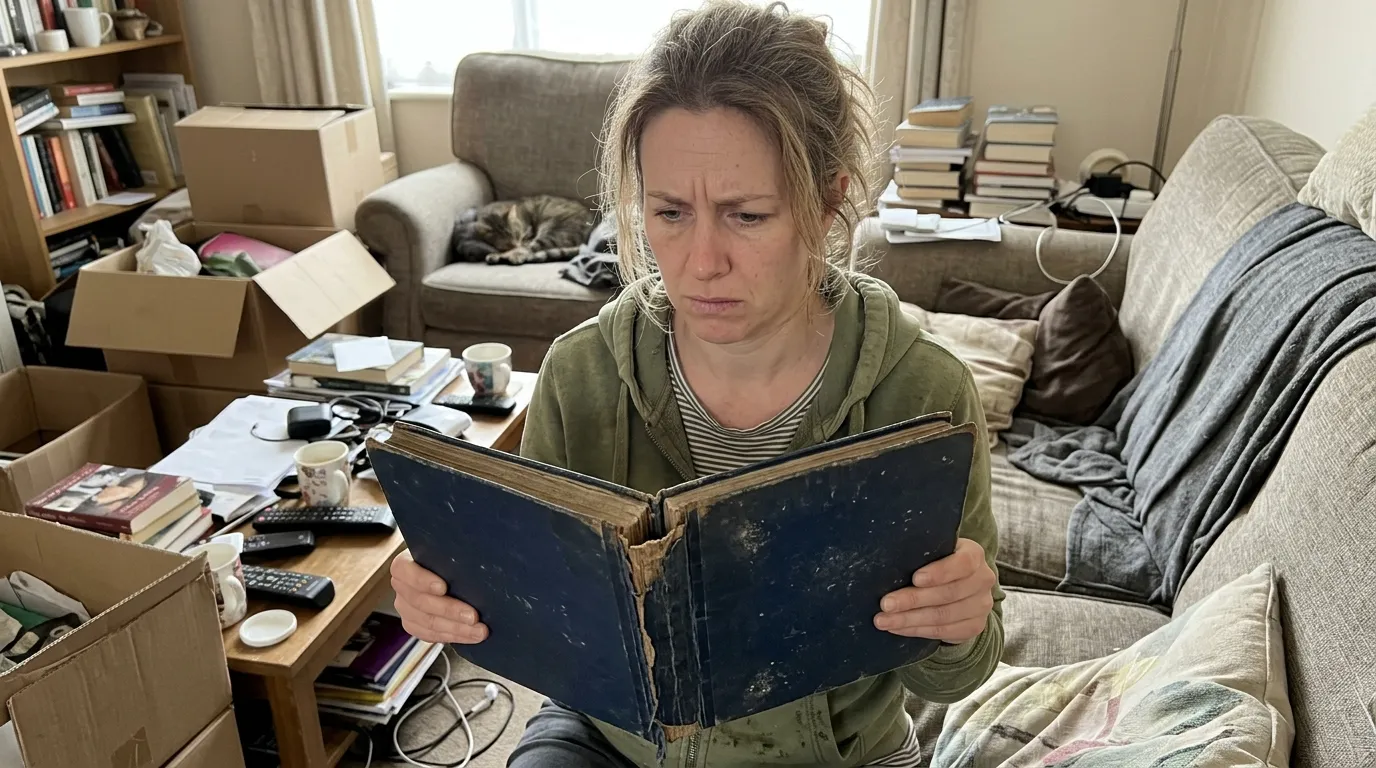
If you are trying to figure out where to get stamps valued, your best option is to consult a certified appraiser or a registered dealer affiliated with recognized philatelic organizations.
Inheriting a vintage stamp collection often feels incredibly overwhelming, especially when you have zero specialized knowledge about the hobby. You stare at pages filled with thousands of tiny paper squares, terrified of making a costly mistake or falling victim to dishonest buyers.
If you are trying to figure out where to get stamps valued, your best option is to consult a certified appraiser or a registered dealer affiliated with recognized philatelic organizations. Inheriting a vintage stamp collection often feels incredibly overwhelming, especially when you have zero specialized knowledge about the hobby.
We understand the anxiety of trying to navigate complex philatelic terminology while attempting to protect your family’s financial assets. In 2026, the global market for rare stamps is highly active, making this the perfect year to evaluate what you actually possess.
However, before you hand your inherited albums over to the first person you find, you must learn how to identify trustworthy experts. One specific, easily overlooked red flag almost guarantees a buyer is secretly trying to lowball you—and we reveal exactly how to spot this manipulative tactic below.
Where to Get Stamps Valued Safely in 2026
When you decide to assess your inherited albums, your first stop should never be a generic pawn shop or a local antique store. These businesses operate on high volume and broad knowledge, meaning they lack the hyper-specific expertise required for accurate philately evaluation.
Instead, you need a dedicated stamp dealer or a certified appraiser who spends their days analyzing microscopic printing variations.
The safest route is to find professionals governed by major regulatory bodies:
- You can search the official directory provided by the American Philatelic Society (APS) to locate vetted professionals with proven track records.
- Working directly with an official American Stamp Dealers Association (ASDA) dealer provides a critical layer of security.
- These individuals must adhere to a strict, legally binding code of ethics.
If you prefer face-to-face interactions rather than mailing your collection away, you can search for local stamp appraisal experts in your immediate area who carry these exact credentials.
These accredited professionals provide honest assessments of your collection’s market potential without pressuring you into a quick, undervalued sale.
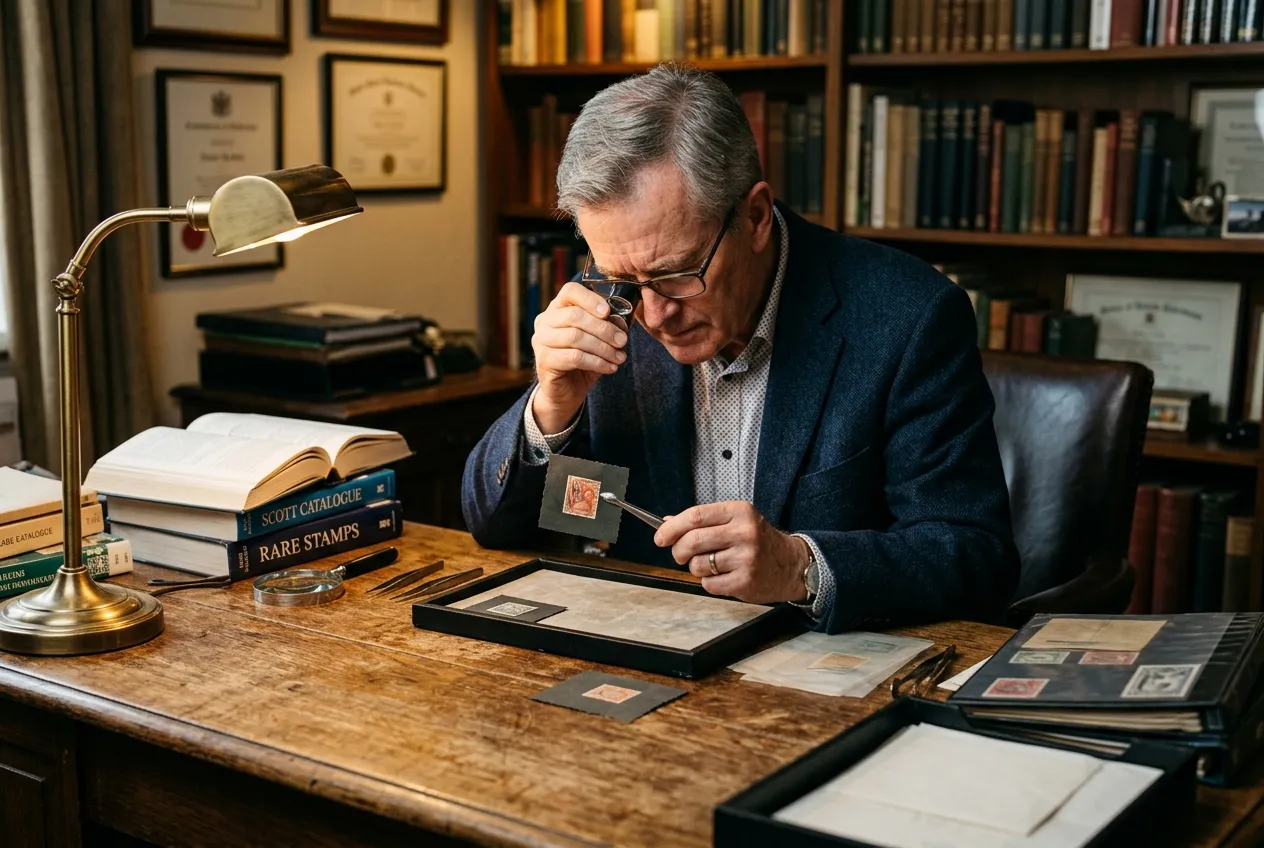
Understanding Stamp Valuation Factors: Original Gum and Centering
To understand why experts quote specific prices, you must learn exactly what they look for during a physical inspection. A stamp’s value is rarely determined by its age alone. Instead, physical condition dictates everything in the philatelic market.
Original Gum
Appraisers look exceptionally closely at the original gum (the adhesive applied to the back of the stamp during manufacturing).
A stamp in pristine mint condition that still retains its undisturbed adhesive is classified as mint never hinged, which commands a massive premium price.
Conversely, if a previous collector used a hinge (a small, folded piece of tape) to mount the stamp, the value drops significantly due to the disturbed gum.
Centering & Perforations
Professionals meticulously examine the centering of the printed design. A perfectly centered image with perfectly even margins on all four sides is highly desirable and rare.
They will carefully count the perforations (separation holes punched between stamps) and check for hidden watermarks using specialized detection fluid.
Once they gather these details, they consult standard reference books like the Scott Catalogue to establish a baseline market value.
Which Appraisal Organizations Can You Trust?
Beyond the North American associations, several international organizations and historic firms set the gold standard for trustworthy valuations.
If you are dealing with British or Commonwealth collections, always look for members of the Philatelic Traders’ Society (PTS). A PTS dealer operates under rigorous international guidelines, ensuring you receive a transparent and fair evaluation regardless of your geographic location.
You might also encounter references to historic companies like Stanley Gibbons, which collectors widely recognize as a premier authority in the global philatelic world. For highly specific regional collections, such as Central European or Czechoslovakian issues, experts rely on specialized regional catalogues like Pofis.
Working with appraisers who utilize these standardized, recognized references guarantees your collection is judged accurately against real-world global market data.
Once you secure a verified appraisal from a trusted organization, you can confidently explore where to sell your stamps to maximize your financial return.
How to Do a Preliminary Self-Valuation at Home
Before booking a formal appointment, you can conduct a basic self-valuation to understand roughly what you possess.
Do not, under any circumstances, attempt to remove the stamps from their protective mounts or album pages. Instead, use a strong magnifying glass to visually examine the most prominent pieces in place.
Look specifically for:
- High denomination face values
- Distinct historical figures
- Highly unusual cancellation marks
- Obvious printing errors
You can cross-reference your visual findings with a modern 2026 collectible stamps price guide to see if you possess any famously rare issues. This preliminary research helps you set realistic expectations for the formal appraisal.
If your inherited album consists entirely of common, heavily canceled post-1940s holiday issues, you might not need a high-end, paid appraisal. However, if you spot pristine 19th-century issues, you absolutely require professional assistance to unlock their true value.
5 Steps to Prepare Your Inherited Collection for an Auction House
If your preliminary home research suggests high value, you should strongly consider selling through a formal Auction House. Preparing your collection properly ensures you receive the highest possible auction estimates.
- Leave everything exactly as you found it. Amateur handling easily destroys delicate paper fibers and microscopic perforations.
- Prioritize keeping stamp blocks together rather than separating them into individual units. A connected block of four is often worth exponentially more than the sum of four separated stamps.
- Store securely. Keep the albums in a dry, dark, climate-controlled environment to prevent devastating moisture and UV damage.
- Document the collection. Take clear, well-lit photographs of the most complete and oldest pages.
- Contact a reputable auction house. Request an initial consultation with specialists in philately who have the global reach to connect rare pieces with serious high-net-worth investors.
The Biggest Scams to Avoid When Selling to a Stamp Dealer
The philatelic market unfortunately attracts its share of unscrupulous characters who actively prey on inexperienced heirs. You must remain hyper-vigilant to protect your inherited assets from predatory tactics.
Another massive scam involves aggressive cherry-picking. A dishonest buyer might offer a flat, seemingly reasonable sum for your entire album, secretly knowing that one or two hidden stamps account for 95% of the total value.
They secure the entire collection cheaply, leaving you completely unaware of the massive treasure you just forfeited.
A third red flag occurs when an evaluator immediately offers to buy the collection themselves while conducting what was supposed to be an objective appraisal. This creates a massive conflict of interest.
An honest appraiser provides a distinct service, separate from purchasing, giving you a written evaluation you can take anywhere. Always insist on a fully itemized appraisal for high-value items. Never accept a vague, lump-sum offer without receiving a detailed, written explanation of the collection’s specific contents.
Are Online Appraisal Tools Actually Accurate?
Many beginners naturally wonder if they can simply upload photos to a website and receive a perfectly accurate price. While online appraisal tools and collector forums provide excellent starting points for identification, they cannot replace physical inspections.
Digital images rarely capture the minute physical details required for a final, binding valuation. A photograph cannot reliably show the structural condition of the adhesive on the back, nor can it definitively reveal a hidden watermark pressed inside the paper.
Furthermore, digital image compression often distorts the precise measurements needed to verify exact margins and specific perforation counts.
Use online services exclusively for preliminary identification, but always rely on a hands-on, physical examination by an accredited expert before finalizing any major financial transactions.
Your Next Steps on Where to Get Stamps Valued
Securing a fair and mathematically accurate valuation requires patience and the right professional connections. Start by identifying local experts explicitly accredited by major philatelic organizations like the APS or ASDA.
Photograph your collection thoroughly for your own insurance records, handle the physical albums as little as humanly possible, and never allow a predatory buyer to pressure you into a hasty, uninformed decision.
Remember that genuine experts want to educate you about what you own, not just separate you from your property. If an interaction feels rushed, secretive, or confusing, walk away.
By taking a slow, methodical approach and relying on vetted, certified professionals, you actively protect your inherited assets and ensure you receive the true, maximum market value for your vintage stamps.
Frequently Asked Questions
How much does it cost to get stamps valued?
The cost to get stamps valued varies widely. Many local ASDA dealers offer a free preliminary look, while a formal, written appraisal for insurance or estate tax purposes from a certified appraiser can cost between $75 and $250 per hour.
Can I get my stamp collection valued online?
Yes, you can get a preliminary valuation online. Several trusted auction houses and organizations like the American Philatelic Society offer digital appraisal services where you can upload clear photos of your collection. However, final binding valuations always require physical inspection of watermarks and perforations.
Where is the best place to find a certified stamp appraiser?
The safest way to find a legitimate expert is through official organizations. Look for a registered ASDA dealer or check the directory provided by the American Philatelic Society. These local stamp appraisal experts follow strict codes of ethics, ensuring you won’t be scammed.
Does mint condition or original gum affect my stamp’s value?
Absolutely. A stamp in mint condition with its original gum undisturbed (mint never hinged) is significantly more valuable than one that has been hinged or used. Even minor flaws in the gum or centering can drastically reduce the stamp’s overall market value.
Should I organize my inherited stamp album before an appraisal?
Do not attempt to reorganize or remove stamps from their original album pages. Inexperienced handling can easily damage the original gum or perforations, destroying their value. Leave keeping stamp blocks together exactly as you found them and let a professional auction house assess them.
Get our latest guides, news, and insights highlighted in your Google Search & AI Overviews.