
If you are wondering, “will older stamp with small tear have any value”, the answer relies entirely on the extreme rarity of the specific issue. A common damaged item is almost always worthless, but an incredibly rare one might still fetch a surprising price at auction.
A small tear significantly lowers the catalogue value of common stamps, rendering them practically worthless. However, exceptionally rare items with a small tear can still hold significant value as “space fillers” for collectors who cannot find or afford a pristine copy.
We analyzed the market demand across recent sales and discovered that a single small flaw does not necessarily mean you should throw your collection away.
Many amateur collectors assume that any damage instantly destroys their investment. While flawless items always command a premium, some of the most famous philatelic treasures in the world have severe structural faults.
Yet, one critical detail separates a worthless piece of torn paper from a highly coveted historical artifact. Do you know which category your collection falls into?
Does a Small Tear Ruin an Old Stamp’s Value?
A small tear significantly lowers the catalogue value, often reducing the baseline appraisal by 50% to 90% depending on the severity and location of the damage.
For standard issues printed in the millions, any tear means buyers will simply wait for a sound copy to appear on the market. A sound copy has zero structural defects, making it the standard baseline for all pricing guides.
However, if the item is historically significant, the tear might just shift its market classification rather than destroying its worth entirely.
If you are assessing the value of a 1919 one cent stamp, a tear renders it virtually un-sellable unless it features an incredibly rare printing error or a highly unusual postmark. Market demand strictly dictates whether collectors will tolerate physical damage on a specific issue.
The ‘Space Filler’ Secret: When Damaged Stamps Are Highly Coveted
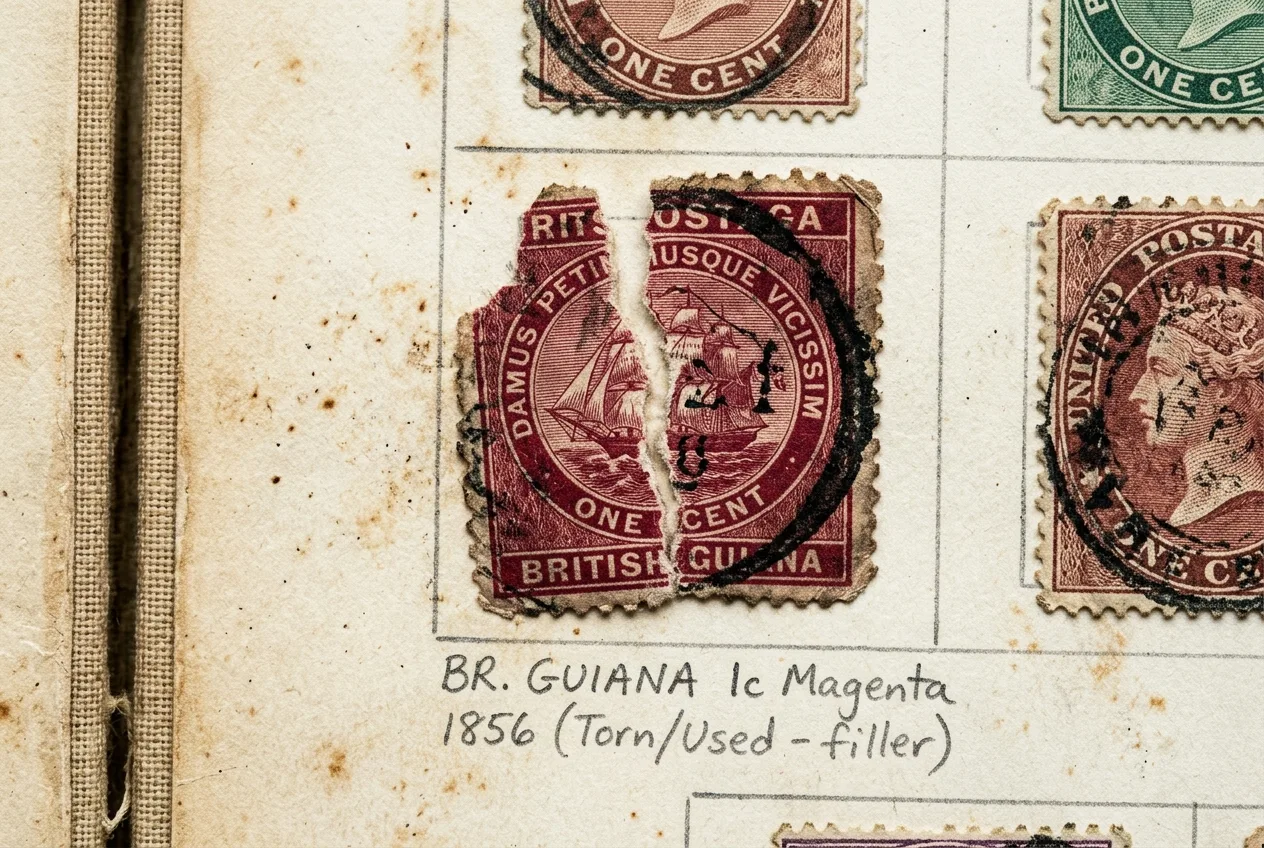
The term space fillers refers to damaged stamps that remain highly desirable because a perfect version is either unaffordable or impossible to find.
Enthusiasts often buy these damaged copies to plug an empty spot on an album page until a better alternative surfaces. This means even a torn stamp can command a high auction price if only a few dozen exist worldwide.
While a pristine example of a rare 19th-century issue might sell for tens of thousands of dollars, the space filler version gives budget-conscious hobbyists a chance to own history.
We tracked recent sales data and found that classic early issues frequently sell well despite missing corners, heavy creases, or small tears. The key driver here is scarcity. If the supply is microscopic, buyers compromise on condition.
How Professional Stamp Grading Views Faults, Repairs, and Tears
Professional stamp grading takes a ruthless, objective approach to assessing condition. Experts look closely at the centering of the design, the presence of original gum, and overall structural integrity.
Any tear, thin spot, or crease strictly registers as a fault, which immediately caps the maximum grade the item can receive.
A perfectly aligned stamp with a small tear will never achieve a superb rating, no matter how brilliant the colors look from the front. Evaluators also scrutinize the paper for hidden alterations, as DIY repairs actively harm the integrity further.
The grading scale treats a mint never hinged stamp with a tear far more harshly than a heavily used, but structurally intact, equivalent.
If you want a comprehensive breakdown of how these specific factors affect exact pricing, consult our Collectible Postage Stamps Price Guide.

4 Steps to Determine If Your Torn Stamp Is Worth Appraising
1. Identify the Exact Issue: First, identify the exact issue using a standard reference like the Scott Catalogue to establish its baseline rarity. If the catalogue shows a minimum value of just a few cents, the tear makes it worthless.
2. Check the Cancellations: Second, check the cancellations on your used stamps. Sometimes, an exceptionally rare postmark—like a specialized railway cancellation or a territorial mark—can completely offset the negative impact of a small tear.
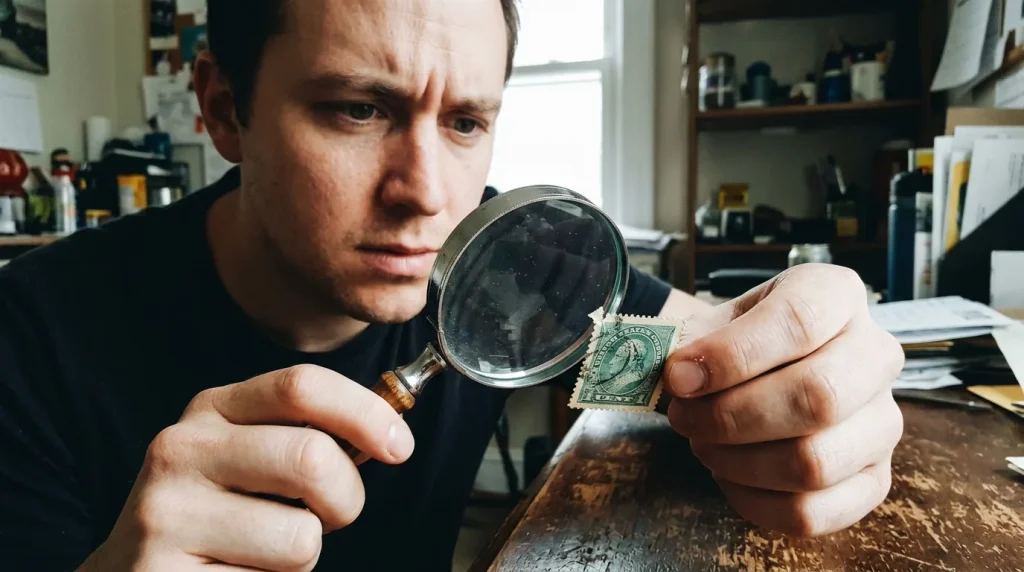
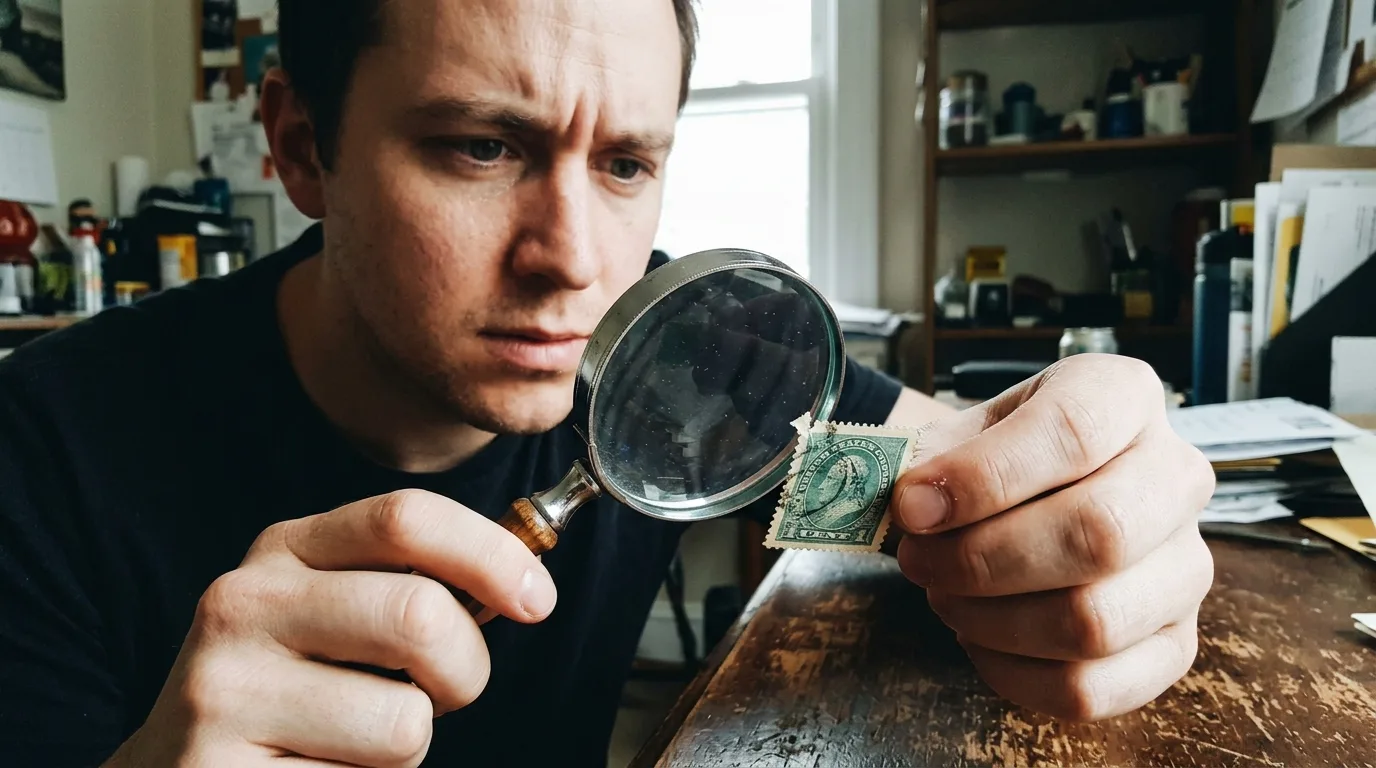
3. Evaluate the Damage: Third, evaluate the extent of the damage under magnification. A tiny edge split measuring one millimeter is far less devastating than a tear that cuts straight through the central portrait.
4. Compare to Known Values: Finally, compare the item to known values for 1 cent stamps value or similar low denominations from the same era. You must verify the baseline rarity before paying for costly professional authentication.
Common Flaws vs. Rare Value: Hinge Marks and Fading
Tears represent physical structural damage, but the hobby recognizes a wide hierarchy of other faults.
For instance, hinge marks on the back of an unused stamp reduce its appeal compared to a pristine copy, but they only affect the gum layer. A tear damages the paper fibers themselves, making it a much more severe penalty in the eyes of buyers.
Fading from prolonged sunlight exposure also dramatically reduces desirability because it ruins the visual appeal and color accuracy.
When collectors weigh different faults, they almost always prefer an intact copy with heavy hinge marks over a torn stamp featuring perfect, vibrant color. Understanding this strict hierarchy helps you set realistic expectations for your inherited album.
Should You Try to Repair a Torn Stamp Yourself?
Never attempt to repair a torn stamp using tape, glue, or paper patches.
Professional authenticators utilize advanced optical tools that easily detect these chemical and physical alterations. A repaired stamp is permanently compromised, which completely destroys any potential value it might have retained as an honest space filler.
We have seen countless inherited collections where well-meaning relatives tried to fix small tears to restore the item to mint condition, rendering the entire album practically worthless to serious buyers.
Leave the item exactly as you found it. If it is genuinely rare, the current market demand heavily favors items in their original, flawed state rather than those botched by amateur restoration attempts.
Selling vs. Keeping: What to Do With Your Faulty Collection
Deciding what to do with a torn collection requires a pragmatic, emotionless approach.
Separate the common issues from the potentially rare ones using standard reference materials. Keep the torn common stamps for their sentimental value or use them as study copies to practice identifying complex watermarks and obscure cancellations.
For the genuinely rare items, seek opinions from established dealers who can assess whether the faults are acceptable given current collector interest.
An old stamp with a small tear might not fund an early retirement, but it can absolutely hold strong historical significance and financial worth if it belongs to a highly sought-after early printing.
Frequently Asked Questions
Are damaged stamps worth anything?
Yes, damaged stamps can still hold significant value if they are extremely rare. Collectors often buy these as ‘space fillers’ until a better copy becomes available. However, common stamps with tears are typically worthless.
Does a small tear completely ruin a stamp?
A small tear significantly lowers the catalogue value, often reducing it by 50% to 90% depending on the severity. But if the stamp is historically significant, it might still sell well at an auction price.
Get our latest guides, news, and insights highlighted in your Google Search & AI Overviews.