
If you’ve inherited a dusty, leather-bound album, you might be wondering after how many years do stamps become valuable.
Most people assume they hold a life-changing fortune simply because the paper appears yellowed with time.
Consider the excitement surrounding the newly discovered Buccleuch Block. This 1840 Great Britain Two-Pence Blue heads to auction for $5 million to $7.5 million in mid-2026.
The short answer to after how many years do stamps become valuable is that age alone never determines financial worth. A 100-year-old stamp can hold zero value, while a 10-year-old error print fetches thousands.
Hearing historical auction stories makes anyone believe their antique collection is a winning lottery ticket.
However, the global stamp market operates on entirely different principles than simple chronological age. In fact, one specific detail that nearly everyone completely overlooks determines whether your inherited album buys a house or buys a coffee.
And that crucial detail awaits you in the next section.
The Age Myth: Why 100-Year-Old Stamps Might Still Be Worthless
The biggest misconception in philately (the formal term for stamp collecting) involves time automatically creating financial value.
During the early 20th century, postal services worldwide printed billions of stamps to meet communication demands. Because factories produced these items in massive industrial quantities, their survival rate remains surprisingly high today.
Even if a specific issue survived an entire century, millions of identical copies likely survived right alongside it.
When you want to determine if your stamps are valuable, you must look far beyond the printing date.
A limited run (a highly restricted number produced for a specific, short-term purpose) creates genuine scarcity. This scarcity ultimately drives intense collector demand.
Furthermore, common cancellation marks (the heavy ink stamps used by post offices to prevent reuse) destroy visual appeal. High-end buyers avoid heavily cancelled items unless the cancellation itself holds unique historical significance.
Age merely serves as a backdrop. True value comes directly from how few pristine specimens actually exist today.
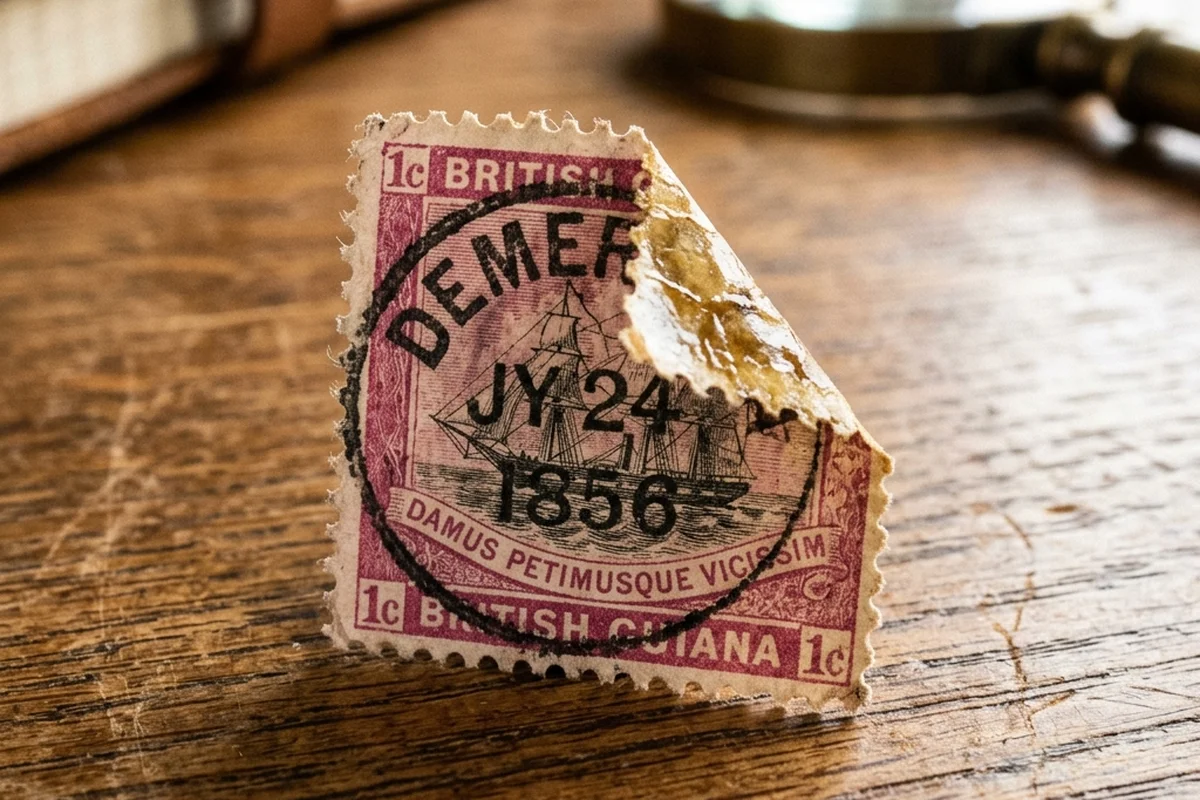
Condition is King: Original Gum, Mint Never Hinged, and Perforations
If chronological age fails to guarantee a high appraisal, physical condition certainly dictates the final price.
Elite collectors enforce strict rules about the physical state of any item they purchase. The industry places the absolute highest premium on items classified as Mint Never Hinged (MNH).
This strict designation means the stamp remains in the exact pristine state as its original printing day.
It features its original gum evenly applied on the back. It also displays zero signs of a hinge (a folded paper piece previously used to mount stamps).
Even the slightest physical imperfections destroy market value instantly.
Severe creases from improper handling turn potentially expensive items into practically worthless placeholders. Thinning of the fragile paper or visible fading caused by sunlight exposure ruins the visual appeal.
You must also closely inspect the perforations (the small punched holes running along the edges).
Perfectionists highly seek intact, perfectly aligned perforations. Torn, blunt, or manually trimmed edges immediately signal a massive drop in desirability and price.
How to Spot Real Rarity: Printing Errors, Inverted Centers, and Limited Runs
Scarcity acts as the true engine of the high-stakes auction market.
Postal services printed standard issues by the millions to keep global mail moving efficiently. However, postal inspectors often caught and destroyed production mistakes quickly, leaving only a handful in public circulation.
These spectacular printing errors represent the ultimate prize for serious collectors willing to spend heavily.
One famous and visually striking example of a highly sought-after mistake involves the inverted center. An inverted image occurs when the central design accidentally prints upside down relative to the outer frame.
Because government quality control usually intercepts these major blunders, the few escapees become legendary overnight.
When inspecting an old inherited collection, actively search for these dramatic anomalies rather than sorting by year.
You might feel surprised to learn just how lucrative rare misprinted stamps become after professionals authenticate them.
3 Steps to Appraise Your Collection Using the Scott Catalogue
Before you contact a professional dealer and expose your lack of knowledge, build a solid baseline understanding.
The undisputed industry standard for identification and pricing in North America is the Scott Catalogue. This massive, comprehensive guide assigns a unique identification number to almost every official postage stamp ever issued.
- Identify the Country and Denomination: Look closely at the tiny text, the currency symbol, and the face value printed directly on the front.
- Match the Specific Design: Use the high-resolution visual references in the Scott Catalogue to find your exact match. Pay extremely close attention to slight color variations, hidden watermarks, and subtle design shifts.
- Check the Condition Grading: The catalogue provides entirely different financial values based on specific usage states.
Heavily used, entirely unused, and Mint Never Hinged items carry vastly different estimates.
Remember that the listed catalogue value typically exceeds actual dealer cash offers. The book serves more as a relative index of market scarcity than a guaranteed cash payout.
Professional Valuation: When to Contact an Auction House or the American Philatelic Society
If you carefully evaluate your albums and genuinely find incredibly scarce pieces, seek expert guidance immediately.
Instead, consult a reputable auction house for a formal, documented appraisal. Establishments specializing exclusively in philately possess the technical tools and private sales data required for accurate estimates.
For absolute certainty, you absolutely must obtain a formal certificate of authenticity.
This step proves critical if you suspect you discovered one of the most valuable United States stamps.
Prestigious organizations like the American Philatelic Society offer specialized expertizing services that rigorously verify both condition and legitimacy.
In the United Kingdom and Europe, Stanley Gibbons remains a premier, historically trusted authority for precise valuation. Their certifications ensure that high-end buyers and sellers operate with complete financial confidence.
Final Thoughts on Stamp Investment Timelines
Understanding the true underlying drivers of philatelic value saves you from false hopes and wasted research time.
The physical age of a stamp acts merely as a historical footnote compared to its confirmed scarcity. Flawless condition and broader historical significance truly dictate the financial bottom line.
Interestingly, while antique mass-produced issues often stagnate in value, some modern consumers find alternative financial utility today.
The significant July 2026 USPS Forever Stamp price hike recently made global headlines. Buying modern sheets serves as a small, highly practical hedge against steady inflation rather than a numismatic investment.
From holding a mid-19th-century rarity to hoarding modern commemoratives, knowing exactly what drives the current market matters. Educated choices ensure you make smart, fully informed decisions regarding your family collection.
Frequently Asked Questions
Are 100 year old stamps worth anything?
Not automatically. While some 100-year-old stamps are highly valuable, billions were printed and saved by collectors. The value depends entirely on condition factors like original gum, perforations, and rarity, rather than just the passage of a century.
How do I know if my old stamps are valuable?
The most reliable method is to check the Scott Catalogue for your specific stamp. Look closely for mint never hinged condition, rare printing errors, or inverted centers. If you suspect rarity, consult a reputable auction house or the American Philatelic Society. Read more about how to determine if your stamps are valuable.
Do stamps increase in value over time?
Common stamps rarely increase in value and barely keep up with inflation. However, highly scarce items, like the Buccleuch Block or stamps with limited runs, have shown strong historical appreciation as demand from high-end collectors outpaces the available supply over the decades.
What makes a postage stamp rare?
A stamp becomes rare primarily due to low print quantities, being quickly withdrawn from circulation, or featuring printing errors such as inverted centers. These scarcity factors, combined with pristine condition and original gum, dictate high market value regardless of the stamp’s age. Learn more about rare misprinted stamps.
Is it worth holding onto modern stamps?
Holding modern stamps as a financial investment is generally not recommended due to massive printing volumes. However, some people buy modern Forever stamps as a small hedge against future postage price increases, rather than expecting them to gain numismatic or collector value.
Error: Contact form not found.
Get our latest guides, news, and insights highlighted in your Google Search & AI Overviews.